It has been four years since we lost Professor Cynthia Goh, one of the foremost architects of palliative care in Singapore. To many, she was a pioneer, a clinician, and a teacher whose influence catalyzed the growth of a national movement in palliative care. To me, she was not only a professor and mentor but also, in more intimate moments, a maternal presence who shaped both my career and my approach to palliative care. It was a privilege to care for her in her final months as part of her home hospice team, a role she personally invited me to take on. That final journey with her, alongside the many shared paths across Southeast Asia, continues to guide my hands, my judgment, and my heart in this field today.
The First Encounter: A Calling Extended
When I joined Assisi Hospice in 2011 and transitioned into home hospice care the following year, I was eager to learn but largely unaware of the individuals who had shaped palliative care in Singapore. One of my early patients, however, was known to Professor Goh.
Anyone who worked with her knew that her care extended far beyond the physical. She was deeply committed to the emotional, psychosocial, and spiritual well-being of her patients, believing wholeheartedly in the continuity of care. She was the kind of clinician who would personally follow up with patients or expect comprehensive updates from the home hospice team.
My first encounter with her arose during a moment of clinical tension. The patient expressed dissatisfaction with our visit, raising concerns with Professor Goh, who contacted me shortly thereafter. Calm yet direct, she questioned our opioid conversion, our communication with the patient, and the steps we intended to take moving forward. At that moment, I did not fully understand the weight of her name in the field.
I defended our actions, perhaps more defensively than I should have, but with genuine sincerity. She listened quietly and responded with thoughtful, measured guidance. What I initially feared was the beginning of numerous clinical conversations, each one deepening my understanding of person-centred care. She taught through accountability, not intimidation, through precision, not volume.
That was my first real encounter with Professor Goh—not in a lecture hall, but in the dynamic, complex environment of home hospice care. It marked the beginning of a relationship that would shape my professional journey in ways I could not then foresee.
Across Borders: A Mission Beyond Singapore
I had the opportunity to work more closely with Professor Goh when she returned to Assisi Hospice in 2015 during a time when the organization required additional clinical support.
Working alongside her again was both challenging and inspiring. She held the care team to high standards—not from a place of harshness, but from a conviction that our patients deserved the best. During case presentations, she expected us to summarize a patient’s story and primary challenges in two clear sentences. This discipline required us to know our patients inside and out—not only their symptoms but who they were as individuals. It’s no surprise that the palliative care doctors she mentored at Assisi Hospice continue to hold similar expectations, even if their personal styles are different.
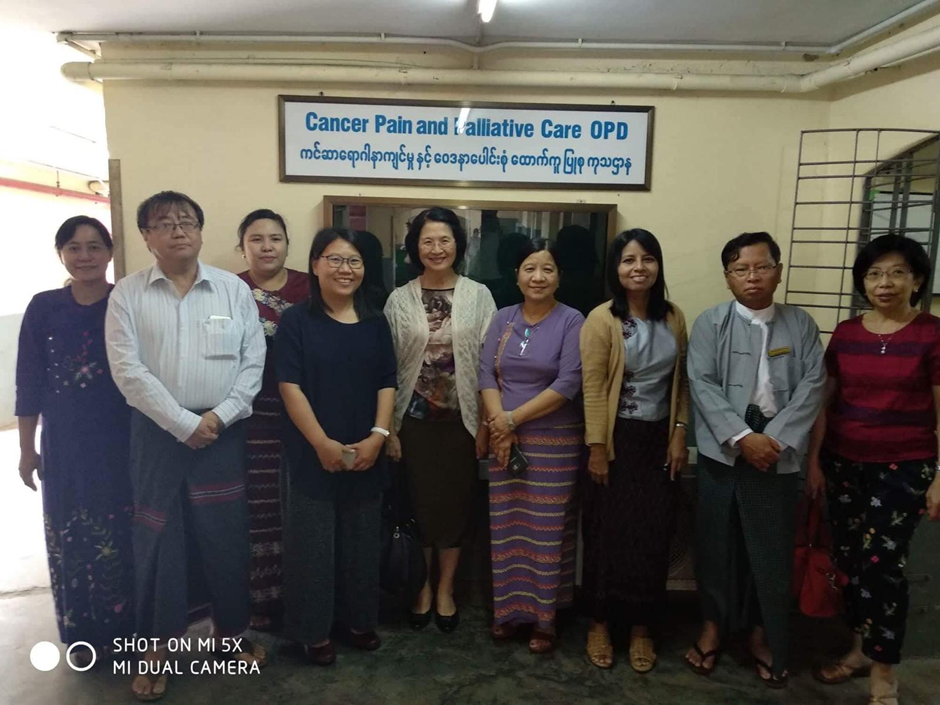
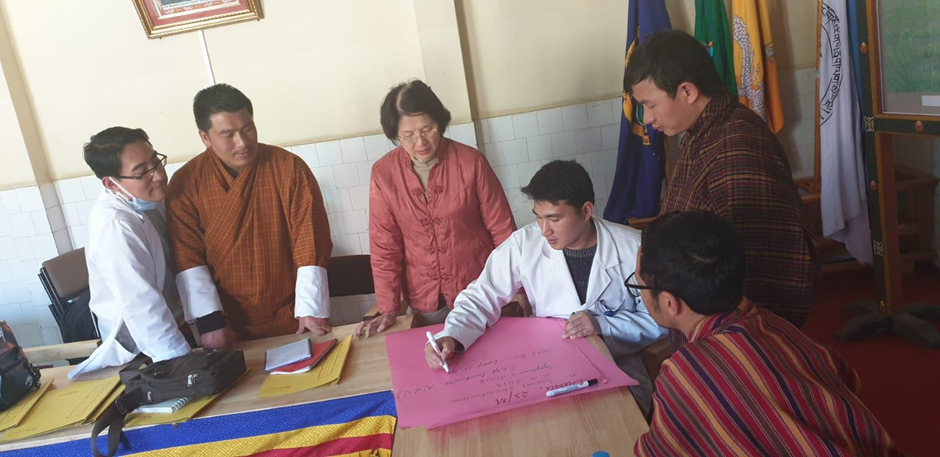
During this time, she invited me to join the APHN Lien Collaborative faculty, initially for Myanmar from 2017-2018, followed by Bhutan in 2018. The Myanmar project evolved from a “train-the-trainers” model into ongoing mentorship—a method she deeply valued. In Bhutan, I had the privilege of being involved from the beginning, with multiple trips to the country.
These experiences were formative, teaching me that palliative care is not just about individual patient care but about building sustainable systems that can deliver compassionate care across regions. In a place like Bhutan, where access to opioids is severely limited and palliative care almost non-existent, Professor Goh worked tirelessly alongside clinicians, educators, and policymakers to integrate palliative care into the healthcare system. She conducted training sessions by day and attended stakeholder meetings late into the evening. Her stamina was impressive, but it was her refusal to accept systemic limitations as moral excuses that truly set her apart.
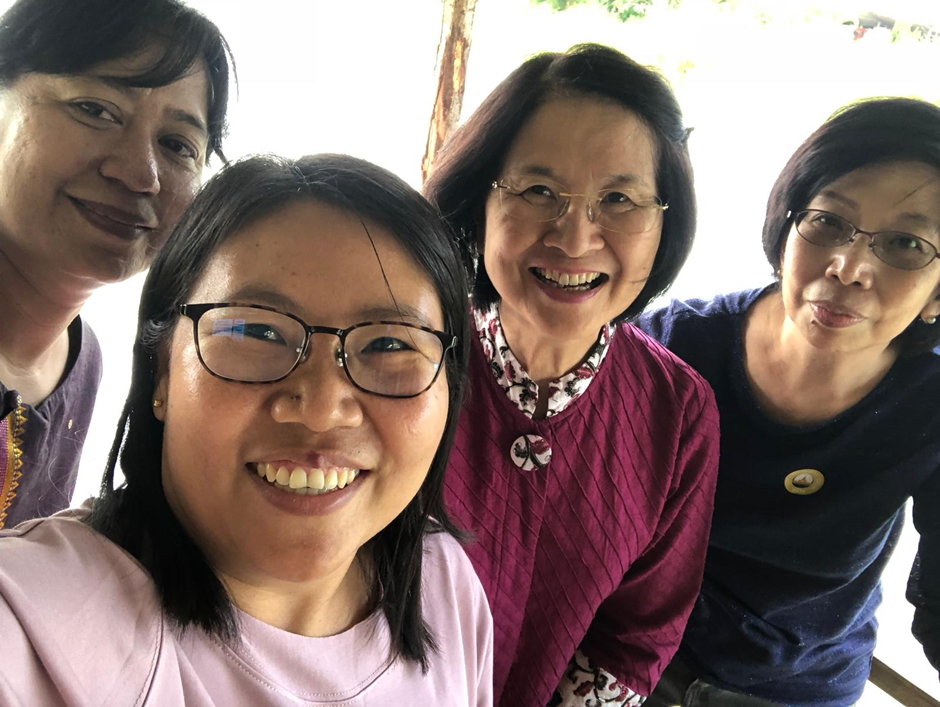
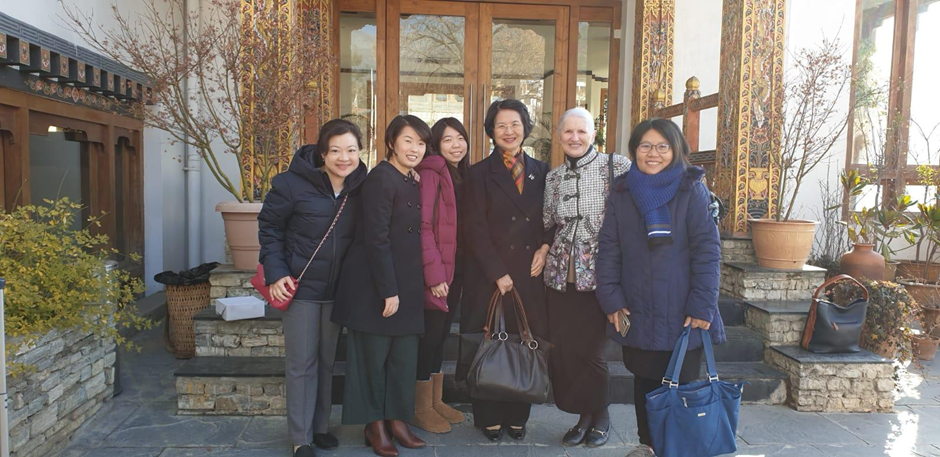
Travelling with her reshaped my understanding of responsibility. Her example expanded my vision of service, urging me to think not just about individual patients but about communities, regions, and the broader profession.
The Final Months: A Shared Privilege of Care
In her final months in 2022, Professor Goh, who was battling advanced pancreatic cancer, invited me to participate in her care. I was keenly aware that this was a shared responsibility—a privilege of care in the truest sense. I worked alongside Dr. Alethea Yee, our home care consultant, and the team at NCCS, who surrounded her with professionalism, compassion, and deep respect.
Witnessing the care provided by the very team Professor Goh had helped build was deeply moving. Their excellence, coordination, and quiet devotion were the clearest testament to her legacy. In watching them care for her, I saw her life’s work made visible.
Even as her illness progressed, she continued to live out the principles she had long advocated. Pain was present, but so was purpose. She continued to think, to write, and to speak for the movement she had helped create. Caring for her revealed palliative care in its fullest form—not just as a profession but as a way of accompanying one another with dignity, clarity, and compassion.
Beyond the Professional: A Life Anchored in Love
Beyond her professional accomplishments, Professor Goh often spoke with quiet pride about her family. She shared stories of her children and grandchildren and of the steadfast partnership she had with her husband, who supported her throughout her illness. These glimpses into her private life revealed the foundation of love and strength that anchored her public leadership.
She showed us that it is possible to hold authority with grace, strength with purpose, and intellect with humility. Her leadership was not just based on knowledge or discipline; it was also rooted in love and compassion.
What She Left Behind
Professor Goh’s legacy is not confined to the past; it lives on in clinical standards, policy frameworks, and the teams she mentored and nurtured. For me, it lives in the values she instilled: compassion guided by wisdom, humility paired with intellect, and an unwavering commitment to service.
She taught us that palliative care is not merely a profession; it is a calling, one that requires clarity, courage, and consistency. Her voice continues to echo in our decisions, especially when the work is challenging, and the path seems uncertain.
Her legacy is not just something to remember in words; it is something we must carry forward in practice, teaching, and the care we provide to every patient entrusted to us.
Conclusion: Her Light, Still Guiding
Professor Goh taught us that death need not be feared, and that end-of-life care can be filled with dignity, meaning, and presence. In her final months, she lived these truths with quiet grace. To walk beside her—as a learner, caregiver, and witness—was a profound privilege.
Though her absence is deeply felt, her light has not dimmed. It continues to guide the work we do, the standards we uphold, and the humanity we bring to every bedside. This reflection is shared in remembrance of Professor Cynthia Goh on the fourth anniversary of her passing, 13 February 2022. It is written with the utmost respect for her legacy and in gratitude for the many individuals and teams she mentored, inspired, and built in the field of palliative care.
Saw Nandar Nwe
Senior Nurse Manager (Home Care)
Assisi Hospice, Singapore