
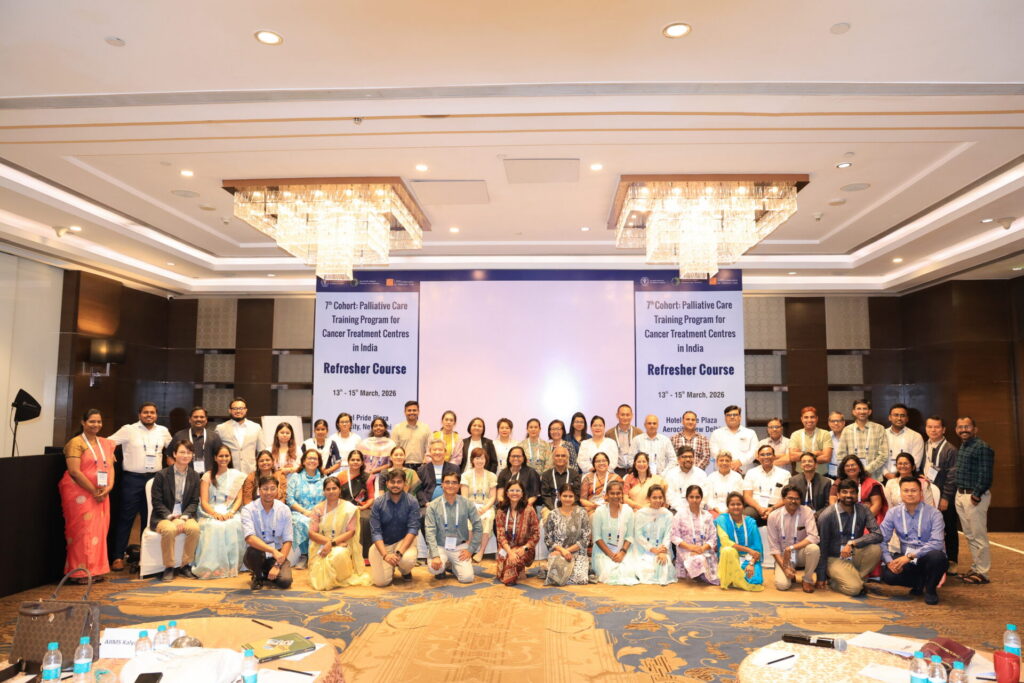
Over three enriching days, from 13th to 15th March, 2026, 42 Doctors and Nurses from 11 centers across India gathered at Hotel Pride Plaza, Aero City, New Delhi, to participate in the CTC 7 Refresher Course Training Program. The program aimed to strengthen clinical knowledge in palliative care, enhance leadership skills, and foster collaborations in the development of palliative care services.
The program provided a dynamic forum for reflection, peer learning, sharing progress from participants’ institutions, while also offering opportunities to deepen clinical expertise and leadership capacity in palliative care.
Setting the stage for Collaborative Learning
The program began a day early with a pre-course faculty meeting on 12th March, 2026. Dr Sushma Bhatnagar, Country Co Lead for India, welcomed the team and guided a thorough review of the course schedule and finlalised session plans, ensuring all faculty members were aligned on their presentation plans and learning objectives. Additionally, Dr Bhatnagar highlighted the importance of creating an engaging and collaborative learning experience for participants.
A total of 20 Faculty members and project management staff supported the training program.
Day 1: Sharing Progress and Strengthening Communication
The day opened with participant registration, followed by a warm welcome by Dr Bhatnagar and Dr Shirlynn Ho, Country Co Leads for India, who jointly set the tone for collaborative, respectful learning and outlined the ground rules for the sessions.
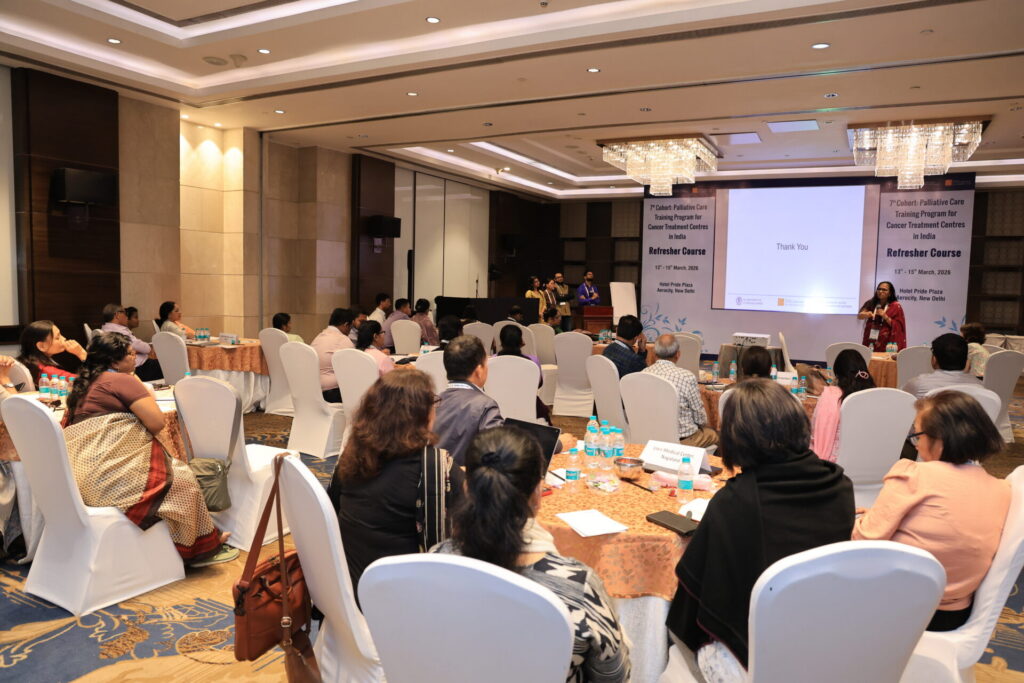
After the obligatory pre-test, the day focused on team progress presentations which allowed participants to share honest updates from their institutions. Each team was invited to share the current status of palliative care services, what they built (achieved), what was hard (challenges), and what they figured out (mitigation strategies) along the way of establishing or strengthening services.
Faculty warmly applauded progress and offered tailored and practical recommendations to further strengthen services at the participating institutions. The room came alive as these sessions created a powerful space for peer learning and mentorship as participants exchanged strategies, identified shared pitfalls, and drew inspiration from each another’s journeys.
The highlight of the day was the much awaited communication workshop led by Dr Santosh Chaturvedi and Dr Seema Rao. Through interactive case discussions, role-plays, and the fishbowl method, participants explored, and practiced how to navigate sensitive conversations with patients and families commonly encountered in clinical practice – a core competency in compassionate palliative care.
The day concluded with a faculty debrief to review sessions and discuss pre-test findings shared earlier during the day.
Day 2: Learning Through Case Discussions and Micro Lectures
Participants were back in the driving seat for Day 2. The purposefully designed participant-led learning approach, had teams present a clinical case study along with two micro-lectures directly linked to their case scenario. These presentations had been prepared collaboratively with assigned mentors, encouraging teams to engage in self-directed learning while strengthening their teaching and presentation skills.
Following each presentation, faculty members enriched discussions by layering it with key clinical insights and practical takeaways. The blend of participant led presentation and faculty guided discussions created a dynamic learning environment for peer learning and connecting theoretical knowledge with real clinical experiences.
Feedback from Day 1 flagged a strong interest from participants to learn about Research in palliative care. Responding promptly, Dr Santosh Chaturvedi delivered an additional session on research in palliative care, which sparked thoughtful discussions on integrating research into clinical practice. This real time responsiveness to participant needs exemplified the learner-centred ethos of the CTC programme.
The faculty debrief reviewed sessions from Day 2, participant feedback from Day 1, and finally to refine plans for the Final Day.
Day 3: Advancing Clinical Practice, Leadership and shared reflections
The final day of the refresher course was faculty-led, focusing on advanced topics essential for strengthening palliative care services. Sessions included lectures and case-based discussions on Developing a pain-free hospital, Building and sustaining palliative care teams, Managing burnout and stress among healthcare professionals, and Strategies to effectively engage hospital administrators in initiating or strengthening palliative care services.
Participants also explored ethical and clinical dilemmas frequently encountered in palliative care, including nutrition and hydration at the end of life, the ethics of withholding and withdrawing life-sustaining treatment, and ethical considerations in terminal sedation.
As a closing segment, faculty members and the project management team shared reflections from their own journeys in palliative care to offer encouragement and practical insights. This rare window into the human stories behind the clinical expertise showcased vulnerabilities, the turning points and the patients they still think about. These narratives were a powerful reminder that behind every clinical framework is a person who chose this work for a reason – and therefore palliative care is as much about vocation and values as it is about clinical skills.
The course concluded with participants completing the mandatory online post-test assessment and feedback survey, providing valuable data to measure learning outcomes and guide future programme improvements.
A Growing Community of Practice
The CTC 7 Refresher Course was far more than just a training event — it was a gathering of a community united by a shared commitment to compassionate, high-quality palliative care. With representation from eleven centres from all corners of India and a faculty and project management team of twenty, the course demonstrated both the breadth of palliative care development underway in the country and the depth of expertise that the CTC programme has helped nurture.
The three-day format blending participant-led presentations, case studies, micro-lectures, faculty-led sessions, and interactive workshops — created multiple layers of learning. Peer exchange was as valuable as formal instruction, and the structured faculty debriefs ensured that every piece of feedback was used to refine the programme in real time.
India’s palliative care landscape is changing and the CTC India program continues to contribute and build a sustainable, skilled, and compassionate palliative care workforce to ensure that those in need have access to holistic palliative care.
Report Submitted by: Archana Ganesh, Program Manager, CTC India