
From May 14–22, 2026, I was blessed to experience nearly two weeks of very rich learning as a Cynthia Goh Fellow. From the 20th World Congress of the European Association for Palliative Care (EAPC) in Prague—the second EAPC Congress I was honored to attend through the fellowship—to a week of in-depth learning from the leaders of Sobell House in Oxford, England, the entire encounter was deeply mind-moving and inspiring.
During the first week, our group—the first batch of Cynthia Goh Fellows—participated in a speaker panel at the EAPC Congress in Prague. It was a meaningful opportunity to share our insights on “Leadership and Collaboration for the Future of Palliative Care in Asia and Europe,” through a joint session hosted by EAPC and Asia Pacific Hospice Palliative Care Network (APHN) on the second day of the Congress.
The session was chaired by Mrs. Joanne Brennan (CEO, EAPC), and our very own Mr. Giam Cheong Leong (Executive Director, APHN). An introductory talk on Leadership Opportunities in Asia-Pacific: Current Gaps & Future Needs, Capacity Building & Leadership Development Pathways was presented by A/Prof. Ghauri Aggarwal (Chair,APHN). This was followed by information on the Cynthia Goh Fellowship and opportunities for European clinicians to undertake work in Asia, shared by Mr. Giam.
The participation of our first batch of CG Fellows then began with the presentation of our joint project, “Upstreaming Cancer Palliative Care in the Asia-Pacific Context: Using a Human-Centred Co-design Approach for Framework Development,” by Prof. Naveen Salins (Head of the Department of Palliative Medicine and Supportive Care, Manipal Comprehensive Cancer Care Centre, India).
This was followed by shared insights from Dr. Sharon Choo (Head of the Palliative Care Unit, Sarawak General Hospital, Malaysia); Dr. Shirlynn Ho, (Head of the Division of Supportive and Palliative Care, National Cancer Centre Singapore); Prof. Salins; and myself, Dr. Mae Corvera, representing the National Hospice and Palliative Care Council of the Philippines as its President.
Our discussion revolved around a human-centred co-design approach to developing a prototype for upstreaming cancer palliative care in Southeast Asia and was moderated by A/Prof. Aggarwal. We shared our thoughts on what “upstreaming palliative care” truly means in the Asia-Pacific context, what success should look like, and why this work is particularly important now.
We explored how a human-centred co-design approach can better identify and respond to the lived experiences of patients and families, thereby facilitating earlier integration of palliative care. We also discussed some of the biggest barriers to early palliative care referral in Asia and the leadership actions needed to move our systems from predominantly reactive care toward more proactive and integrated care.
Importantly, we reflected on the tremendous cultural and health-system diversity across Asia, and how frameworks developed from international evidence can remain culturally sensitive, locally relevant, and responsive to the realities of the communities we serve.
Further on, we shared our thoughts on leadership priorities and the collaborative actions between Asia and Europe that could meaningfully accelerate the upstreaming of cancer palliative care.
EAPC was truly another rich opportunity to represent and share our experiences from Southeast Asia, and particularly from my own country, the Philippines, which is slowly but surely progressing in the development of our National Program for Palliative and Hospice Care.
To be able to witness this progression in the continuing light of the global stage—while also shining our own light so that others may learn from our experiences—was another tremendous privilege. It is one that I remain deeply grateful for and one that will forever be ingrained in my own story and commitment to serve, lead, and teach others.
A Week at Sobell House, Oxford
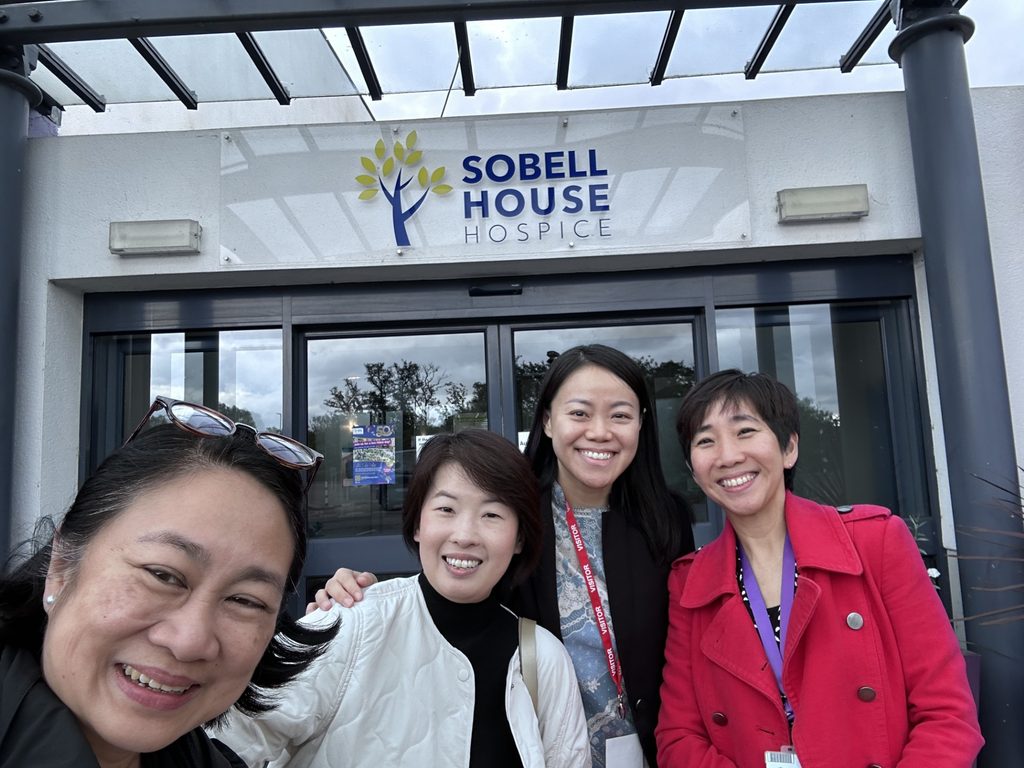
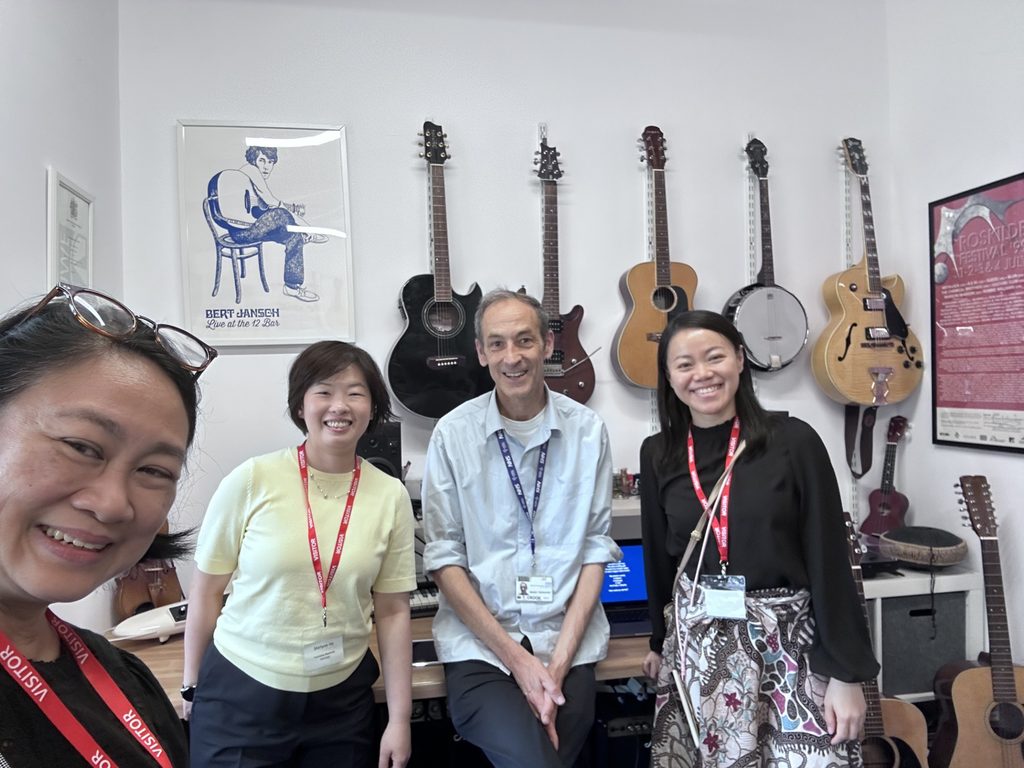
The part of this learning journey that I especially treasure was our week at Sobell House in Oxford.
Sobell House represents a well-established model of hospice and palliative care in England, strengthened through partnerships across the health system, charitable sector, stakeholders, and private donors. For me, it offered many important lessons relevant to the NGO I work with in the Philippines, The Ruth Foundation for Palliative and Hospice Care.
Those five days gave me far more than I had expected. The immersion and experiential knowledge so generously shared by the leaders of Sobell House were extraordinarily rich. A separate report drawn from the personal notes I took during each session will describe, in much greater detail, all that I was given to take home.
And along with all those lessons, how I wish I could also have brought home the entire Blackwell’s Bookshop, the historic flagship bookstore on Broad Street!
The Gift of Learning from Professor Bee Wee
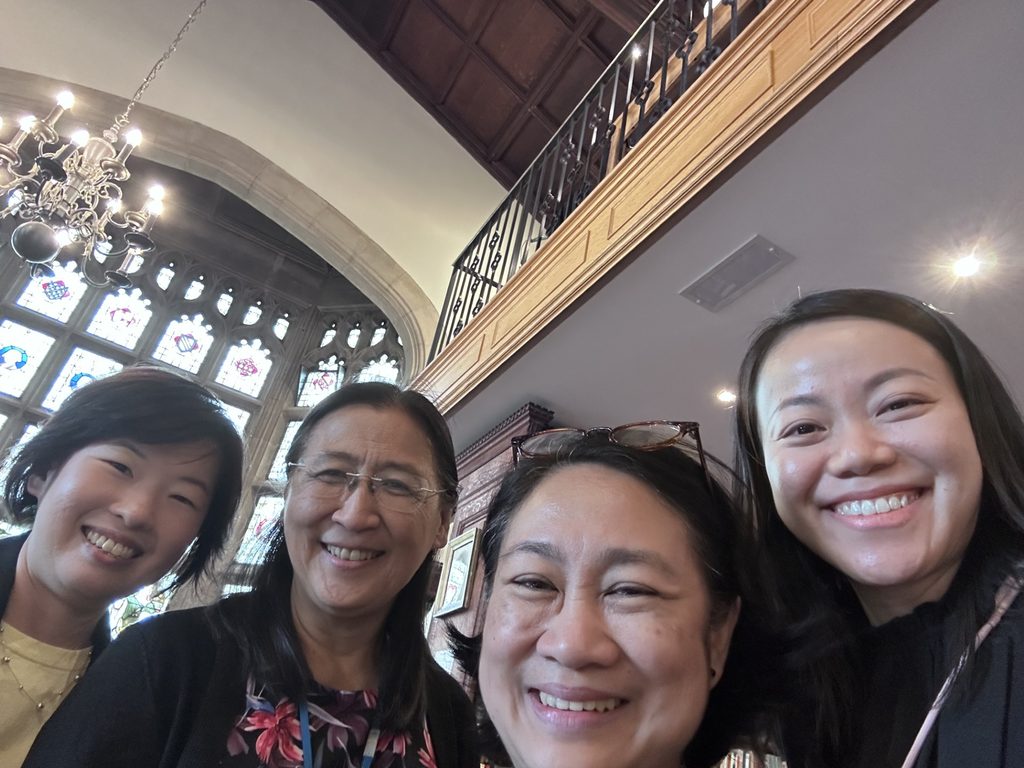
I must especially express my deepest gratitude for the extraordinary generosity of wisdom, time, and shared experience of Professor Bee Wee CBE, a significant figure in UK palliative medicine.
To share only a fragment of the accomplishments of this deeply impactful yet incredibly humble leader: Prof. Bee served as President of the Association for Palliative Medicine of Great Britain and Ireland from 2010–2013. She chaired a NICE Standing Advisory Committee for Quality Standards and served as National Clinical Director for End of Life Care at NHS England, providing national strategic leadership for palliative and end-of-life care.
She was appointed Commander of the Order of the British Empire (CBE) in the 2020 New Year Honours for her services to palliative and end-of-life care.
She has likewise made significant contributions to palliative-care education. In 2010, she led the development of e-ELCA (e-End of Life Care for All), an extensive e-learning programme originally commissioned by the UK Department of Health. She also co-edited the Oxford University Press book Education in Palliative Care: Building a Culture of Learning with Nic Hughes.
Knowing even this small part of her contribution, one can understand why the words “moving” and “inspiring” hardly seem enough to describe our time with her. Words simply cannot capture it all.
And then came an experience I will probably never forget.
Prof. Bee generously invited us to join her and her equally esteemed husband, Dr. Richard Hillier, for a faculty dinner at Harris Manchester College, Oxford—Oxford’s college dedicated to mature students.
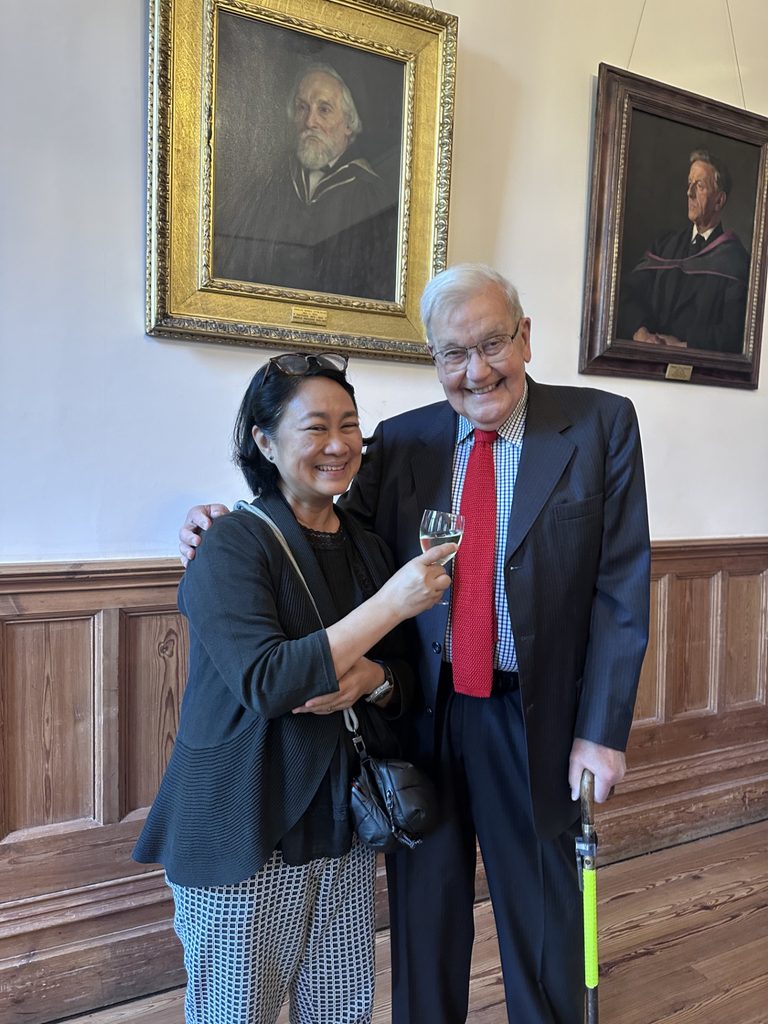
Dinner was held in the beautiful late-Victorian Arlosh Hall, and for someone visiting Oxford from the Philippines, the whole experience felt almost surreal—perhaps even a little like stepping into a scene from a Harry Potter movie.
Everyone was formally dressed, with students wearing their academic gowns. Fellows, students, alumni, and guests gathered for dinner, with the Fellows traditionally seated at High Table. The atmosphere was ceremonial and steeped in tradition, yet at the same time wonderfully warm and convivial.
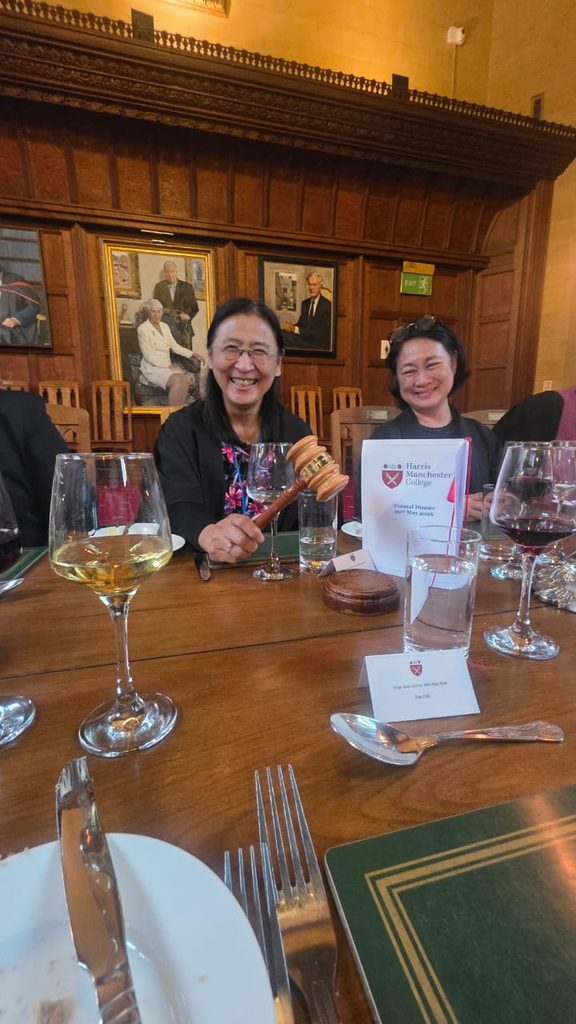
The students took their places, and Dr. Choo, Dr. Ho, and I had the privilege of entering with the Fellows and college officers in procession as the students stood. What made the evening even more special was that Prof. Bee was presiding over High Table that evening. She held the gavel, striking it to bring the Hall to attention and mark the formal proceedings of the dinner.
There was something deeply humbling about that moment. Coming from the Philippines and finding myself seated amid the traditions of an Oxford college, alongside people whose work has helped shape the field to which I have devoted so much of my own life, I remember thinking: How did I find myself here?
After dinner, we had the opportunity to spend a more intimate time with the faculty in another historic room over coffee and conversation. It was there that I met one guest who shared with me her personal story of how deeply she appreciated Filipina nurses.
Of course, I swelled with pride.
Our Filipino nurses—and indeed so many of our Filipino healthcare workers—have quietly and profoundly made their mark in England and across the world through their competence, compassion, warmth, and instinctive ability to care for people in their most vulnerable moments. Hearing her story so far away from home was a beautiful reminder that the kind of care our people give leaves an imprint long after the actual encounter has passed.
It was, indeed, a truly magical evening.
Paying It Forward
As they say, we are lifelong learners, and I remain deeply grateful to the Cynthia Goh Fellowship (CGF) Program for the generous opportunity to grow as a leader over the past three years.
Through this fellowship, we have been given opportunities to learn through international and regional conferences, to engage with leaders from different health systems and cultures, and, perhaps most importantly, to learn alongside one another. It was therefore with immense gratitude—and admittedly a little bittersweetness—that I took this final learning journey with my CGF co-fellows.
I return home carrying much more than new knowledge.
I carry lessons from Prague and Oxford, conversations with extraordinary leaders, friendships strengthened across countries, and an even deeper conviction that the knowledge entrusted to us is meant to be shared.
And so, I look forward with even greater anticipation to helping shape the next generation of palliative care leaders in our country—paying forward the invaluable lessons, leadership formation, and deeply personal and professional growth that this program has so generously given me.
Perhaps that is the greatest gift of being a lifelong learner: what we are privileged to receive eventually becomes something we are called to give away.
Written by Dr. Rumalie “Mae” Alparaque-Corvera, CEO, The Ruth Foundation for Palliative and Hospice Care.
She is also a Fellow from Batch 1 of the Cynthia Goh Palliative Care Fellowship (CGF). The CGF is administered by the Asia Pacific Hospice Palliative Care Network (APHN) with support and direction from Lien Foundation.

