

The Lien Collaborative for Palliative Care in the Philippines has entered an important stage in its journey: moving beyond developing individual educators towards building a strong, sustainable National Faculty capable of expanding quality palliative care education and services across the country.
In August 2026, palliative care leaders and educators from across the Philippines came together with the APHN international faculty for a two-day National Faculty leadership programme. The programme built on the first phase of faculty development conducted in September 2025 and focused on strengthening participants as educators, mentors and leaders who can support the growth of palliative care within their respective regions.
Bringing International and Philippine Expertise Together
A key strength of the Lien Collaborative is the combination of international experience with strong local leadership and knowledge of the Philippine healthcare context.
Importantly, the programme brought together the wider palliative care community with the Philippines Department of Health (DOH). The programme itself included contributions from DOH representatives on national palliative and hospice care capacity, generalist palliative education and the development of services.
This combination of international faculty, Philippine leaders, professional groups, training institutions and DOH participation reflects an important principle of the Lien Collaborative: sustainable capacity is built by strengthening local leadership and connecting people who can collectively advance palliative care.
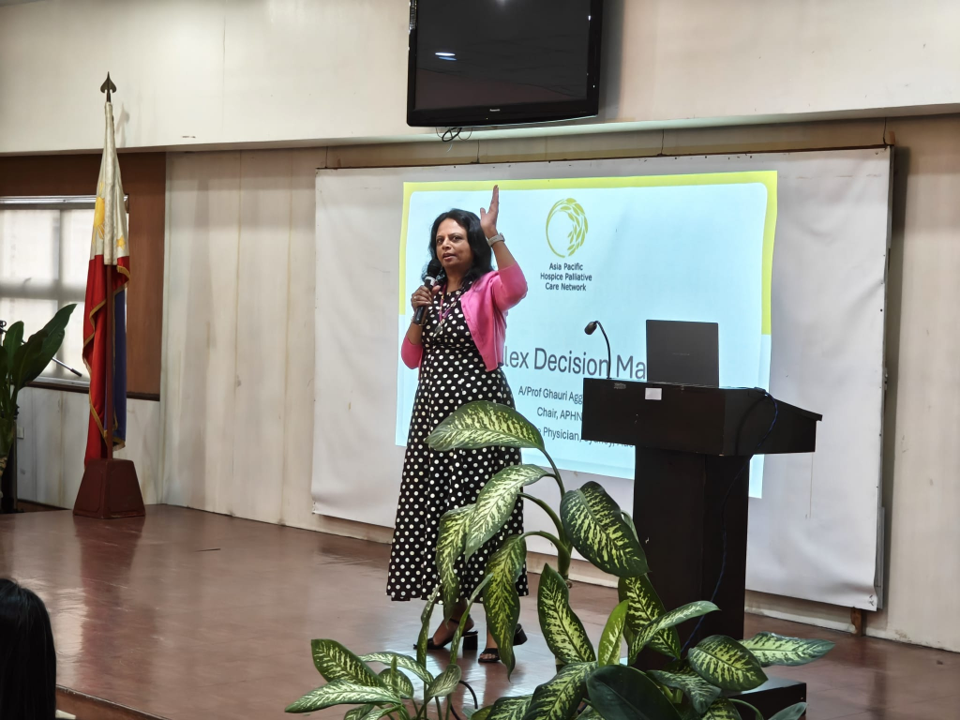
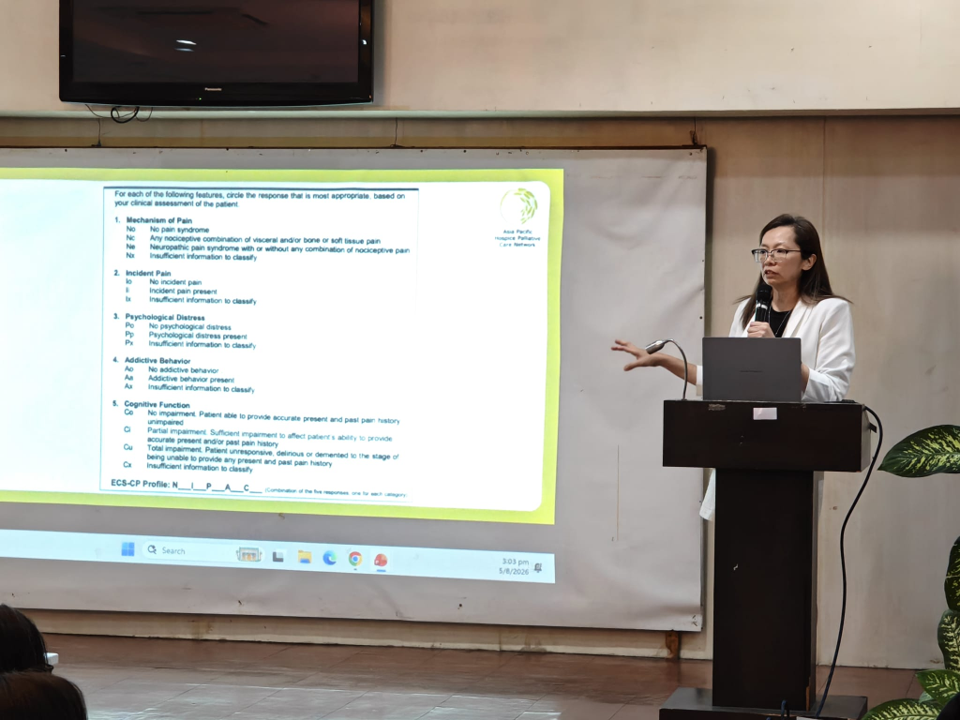
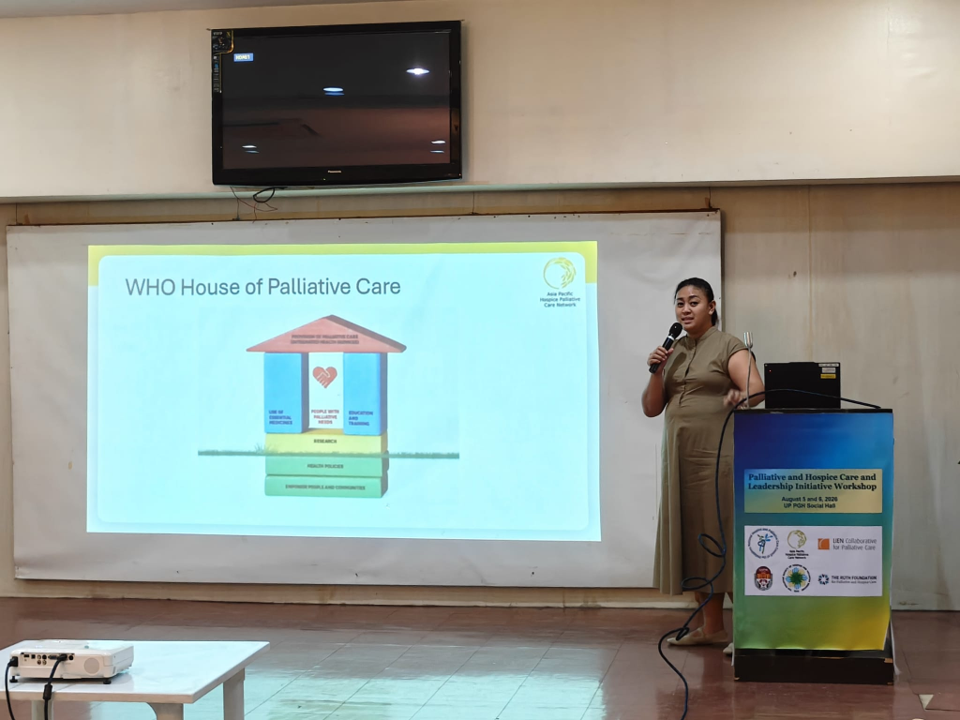
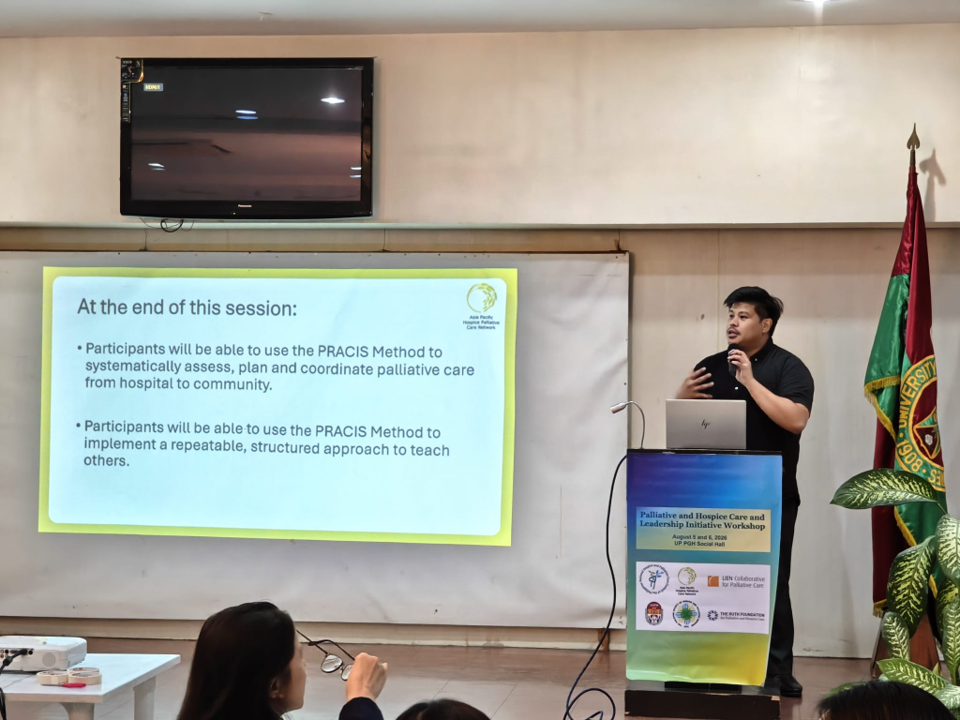


Since 2013, APHN and the Lien Collaborative have worked with palliative care leaders in the Philippines to strengthen education, develop local trainers and build sustainable palliative and hospice care capacity. This partnership has now been further strengthened through the active engagement of the Department of Health. Dr Lester Geroy, Mr Teddy Dizon and Ms Royce Berango, representing DOH capacity-building efforts, reinforced the importance of developing trainers and expanding palliative care training through regional hospitals. Their participation reflects a shared commitment by DOH, APHN and Philippine palliative care leaders to build regional training capacity, strengthen local ownership and support the sustainable expansion of palliative care services across the country.
From Educators to Leaders
Feedback from the first phase showed that participants were ready to progress beyond foundational faculty development. They identified the need for advanced capabilities in teaching, mentorship, leadership, implementation and systems thinking. Training also needs to remain practical and relevant to the realities of healthcare delivery across the Philippines, including geographically isolated and disadvantaged areas, primary care settings and community-based services.
The August programme therefore centred on three interconnected areas: transforming systems and communities, advancing clinical excellence, and becoming faculty leaders.
Participants explored the current state of palliative care development, generalist and specialist education, financing, compassionate communities and coordinated care. Clinical sessions used case-based approaches to strengthen competencies in advanced pain and symptom management, complex decision-making and nurse case management.
The programme emphasised that National Faculty members must also become skilled facilitators and mentors who can develop the capabilities of others and nurture the next generation of trainers and leaders.
Taking Training Across the Philippines
A major focus was how to extend palliative care capacity beyond major centres and make training accessible throughout the country.
Participants worked in geographic clusters representing Northern Luzon, Southern Luzon and the National Capital Region, Western Visayas, Eastern Visayas, Mindanao and Palawan. Each group mapped existing services, specialist and generalist programmes, community and home-based services, hospital programmes, faculty resources and supporting policies. They then identified priorities and support required within their respective regions.
For an archipelagic country such as the Philippines, this decentralised approach is essential. A sustainable programme cannot depend indefinitely on a small group of specialists travelling throughout the country. Capacity must increasingly reside within the regions through regional faculty pools, training hubs, local champions, mentorship and communities of practice.
There is already a foundation upon which to build. 18 multidisciplinary teams have been trained by DOH-Jose B. Lingad Memorial General Hospital (JBLMGH) with the support of the Medical Center Chief Dr Monserrat S. Chichioco and Dr Agnes Bausa-Claudio as project lead of Training of Trainers for Basic and Intermediate Course and Capacity Building for Primary Care Providers, involving professionals from medicine, nursing, pharmacy, social work and nutrition. Their experience also demonstrates that training must be accompanied by organisational readiness and sufficient workforce capacity if newly trained teams are to establish and sustain services.
Creating a Training Multiplier
The next challenge is therefore not simply to conduct more courses, but to create a training multiplier.
The National Faculty can become the core resource for developing the next generation of trainers. This includes strengthening nurses, fellows and other healthcare professionals as educators, reducing dependence on the relatively small pool of palliative care specialists and creating a broader multidisciplinary teaching network.
Training itself must continue to evolve. Participants strongly supported moving away from predominantly lecture- and knowledge-based education towards practical learning through small-group workshops, simulation and role-play, bedside and case-based mentoring, teaching practicums, regional immersion and peer mentoring.
The Intermediate Training programme provides an important opportunity for this transformation. Its development should place greater emphasis on practical skills and competencies that healthcare professionals can apply directly in caring for patients and families.
A National Network Built on People
Ultimately, the success of the Lien Collaborative Philippines programme shall be when Filipino faculty can independently train and mentor others, regional teams can develop sustainable services, and palliative care knowledge and skills continue to spread from national leaders to regional trainers and frontline healthcare professionals.
The vision is of a National Faculty whose members are not only educators, but also mentors, systems stewards and change agents—people who can connect education with clinical practice and translate knowledge into sustainable improvements in care.
The involvement of APHN, the Department of Health Philippines, Hospice Philippines, the Philippine Society of Hospice and Palliative Medicine, The Ruth Foundation, academic and healthcare institutions, nursing leaders and local palliative care champions demonstrates the power of a network approach. No single organisation or group can develop palliative care for an entire country. Progress comes when expertise, leadership and resources are connected and local leaders are empowered to lead within their own communities.

The APHN International Faculty comprised A/Prof Ghauri Aggarwal and Jon San Martin from Sydney, and A/Prof Patricia Neo Soek Hui and Claire Anne Ricafort Divinaflor from Singapore. They brought experience in palliative care service development, clinical care, education, nursing leadership and faculty development.
Working alongside them were Philippine palliative care leaders, who brought a wealth of local expertise and perspectives:
- Dr Rumalie Corvera — Chair, Hospice Philippines
- Dr Djhoanna G. Aguirre-Pedro — Department Chair and Training Officer, De La Salle University Medical Center
- Dr Karin Estepa-Garcia — Chair, Department of Family and Community Medicine
- Dr Ruth Chi — CEO, The Ruth Foundation
- Dr Martha Umali — Associate Professor, University of the Philippines Manila College of Medicine
- Dr Rojim J. Sorrosa — Palliative and Hospice Care Specialist, Davao
- Dr Mari Joanne G. Joson — Chief, Supportive Hospice & Palliative Medicine
Together, they contributed valuable insights and perspectives to the discussions.
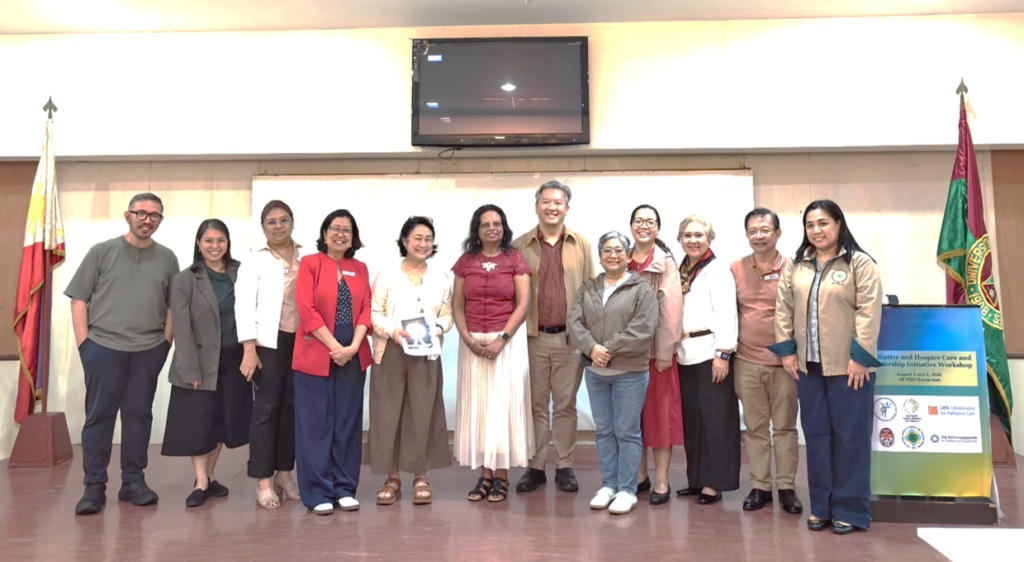

Through the Lien Collaborative for Palliative Care, APHN remains committed to building this human capacity. By investing in a National Faculty that can teach, mentor and develop other trainers, the programme creates a multiplier effect capable of reaching far beyond any single course or institution.
Train the faculty. Empower the regions. Build the network.
Through stronger people and stronger networks, palliative care capacity can grow sustainably across the Philippines—bringing compassionate, competent and dignified care closer to patients and families wherever they live.
Written by Mr Giam Cheong Leong (APHN Executive Director )
This project is a Lien Collaborative for Palliative Care initiative to build capacity in developing countries in Asia. The Lien Collaborative for Palliative Care was co-developed by the Asia Pacific Hospice Palliative Care Network (APHN) and the Lien Foundation.

