
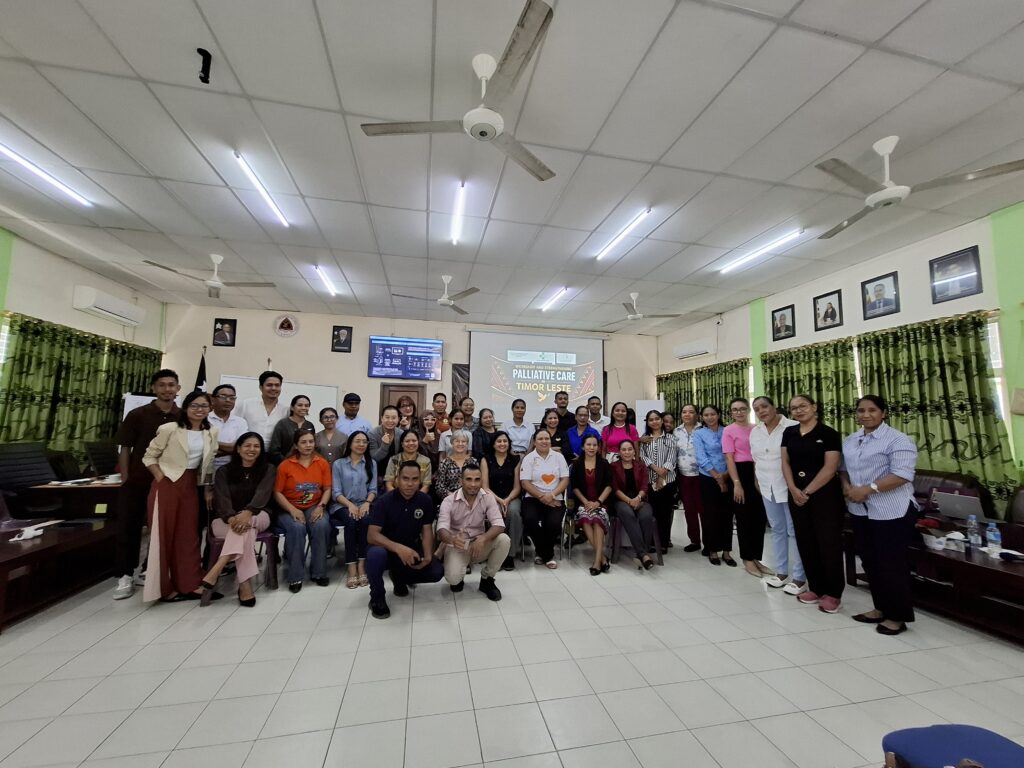
A meaningful leadership journey begins when belief meets action and that is exactly what unfolded in Timor-Leste through Module 6 of the Lien Collaborative for Palliative Care project. From an early spark of conviction to a countrywide effort to build compassionate care, this final module marked not an ending but a strong and hopeful beginning.
From belief to movement
It began, as many meaningful journeys do, with a single moment of quiet conviction. Dr Flavio Brandão, Vice-Minister for the Operationalization of Hospitals, Timor-Leste, was watching the video about Palliative Care in Asia when something shifted. Here was a field of medicine shaped not only by treatment but by comfort, dignity and presence. He began to believe that palliative care could, and should, be made equitable for the people of Timor-Leste.
A conversation with the Asia Pacific Hospice Palliative Care Network (APHN) turned that conviction into collaboration, and over time, collaboration into a movement.
Building the foundation
From 2023 to 2026, the faculty team from the Lien Collaborative for Palliative Care visited Timor-Leste repeatedly to share knowledge with doctors and nurses across the country. Working in partnership with Hospital Nacional Guido Valadares (HNGV) in Dili, the programme welcomed healthcare professionals from the main national hospital, district referral hospitals, and NGOs into a six-week curriculum of lectures, case-based tutorials, role play, and clinical bedside mentoring. Between visits, participants returned to their own wards and clinics to practise what they had learned, gradually building palliative care services in their own hospitals and extending support to communities, especially in rural areas.
Module 6 – A curriculum for the whole person
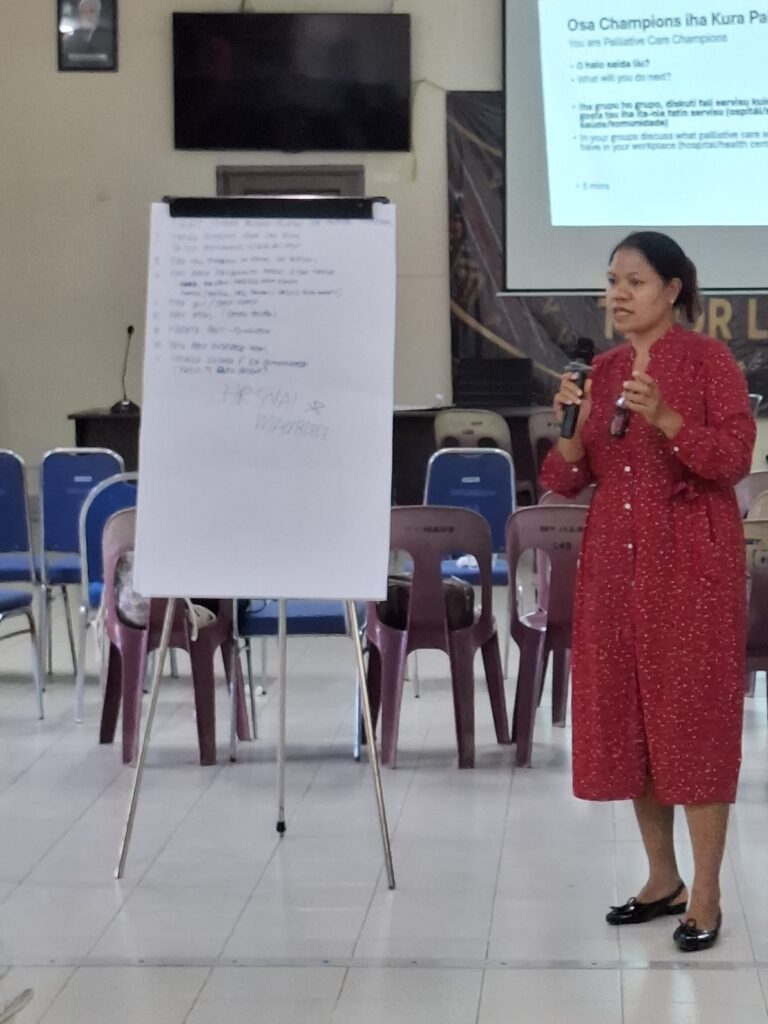
Held at INSP-TL from 27–31 July 2026, the five-day module brought together 29 participants from HNGV, INSP-TL, SABEH and hospitals and health centres across Suai, Oecusse, Maliana, Baucau, Vera Cruz, Natarbora, and Maubisse. Participants took centre stage as they shared their knowledge with co-workers from municipalities across the country, turning the final module into a powerful moment of teaching, reflection and leadership.
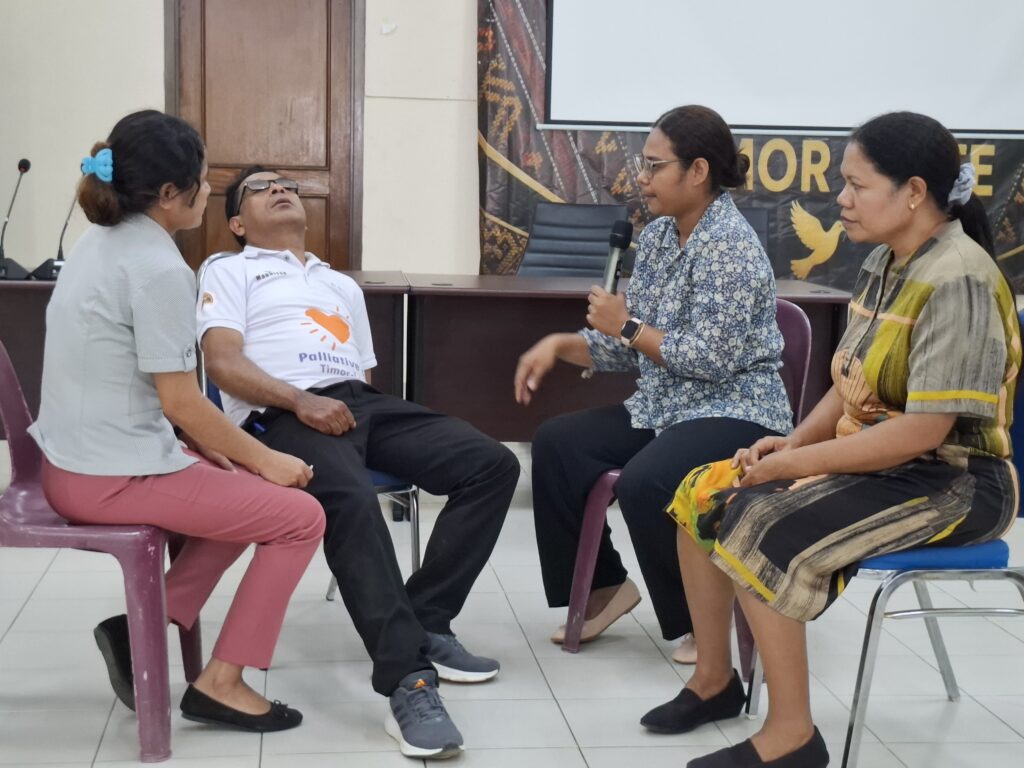
The five-day module was designed with this train-the-trainer purpose in mind. Sessions covered introduction to palliative care, communication skills, oral problems, psychological support, pain, breathlessness, anorexia/cachexia, nausea and vomiting, wound care, constipation, and end-of-life care. Through case scenarios, group discussions and practical exchange, participants deepened their clinical understanding while also preparing to teach and support other healthcare workers who had not attended the programme.
Leadership and learning
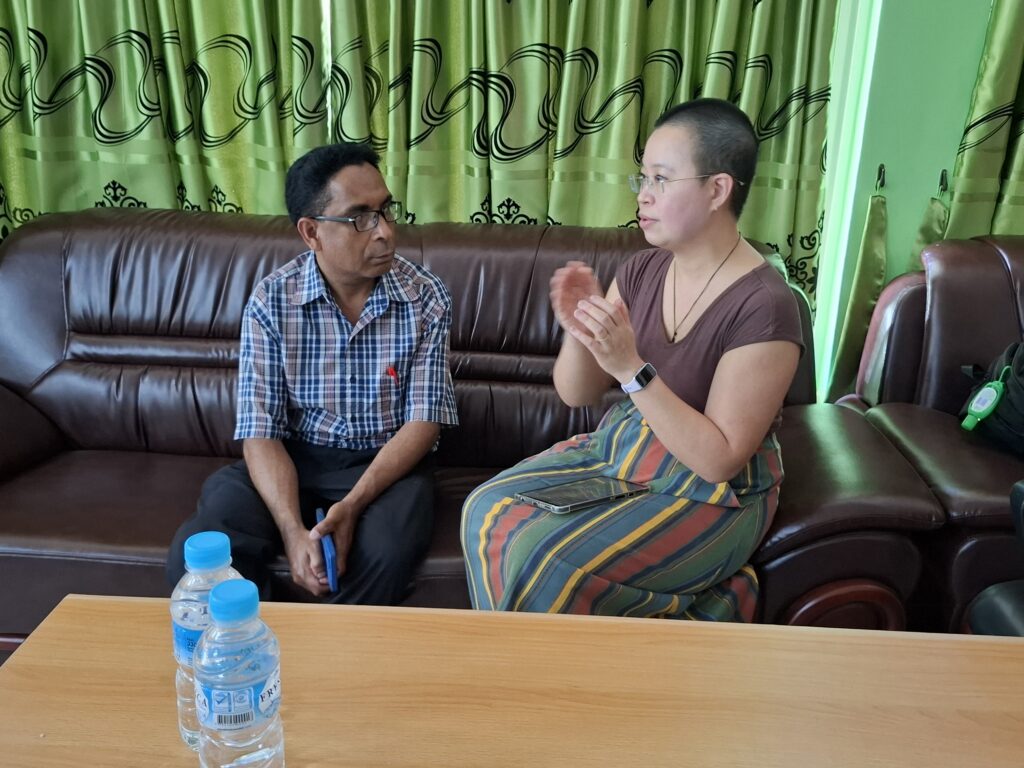
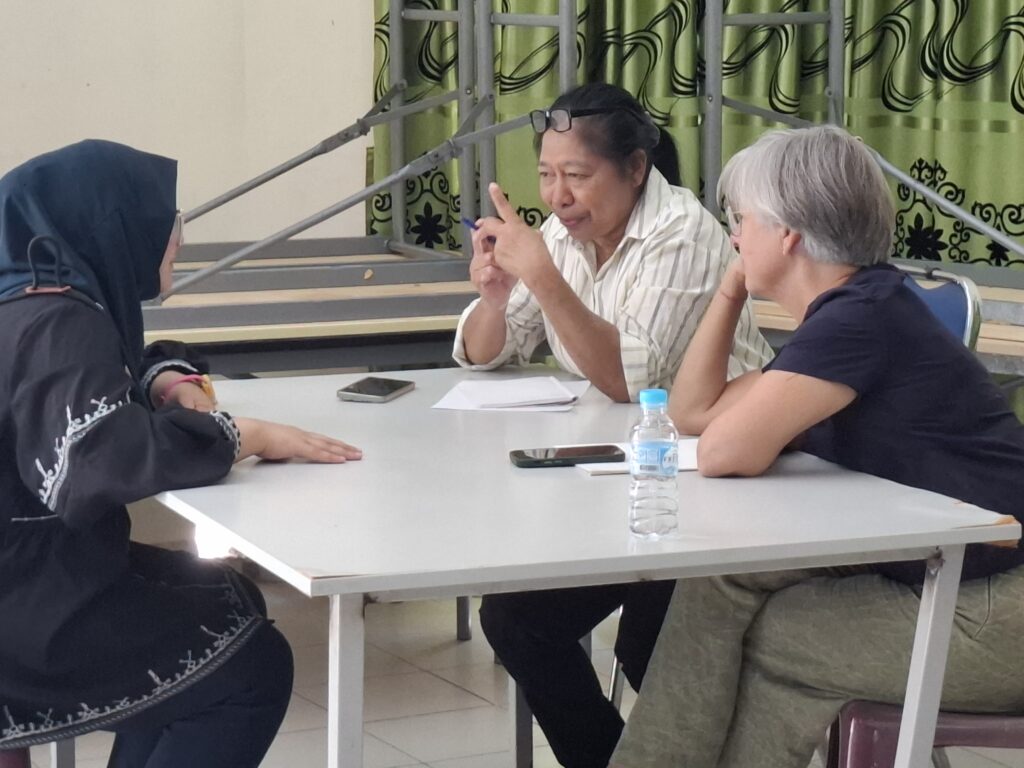
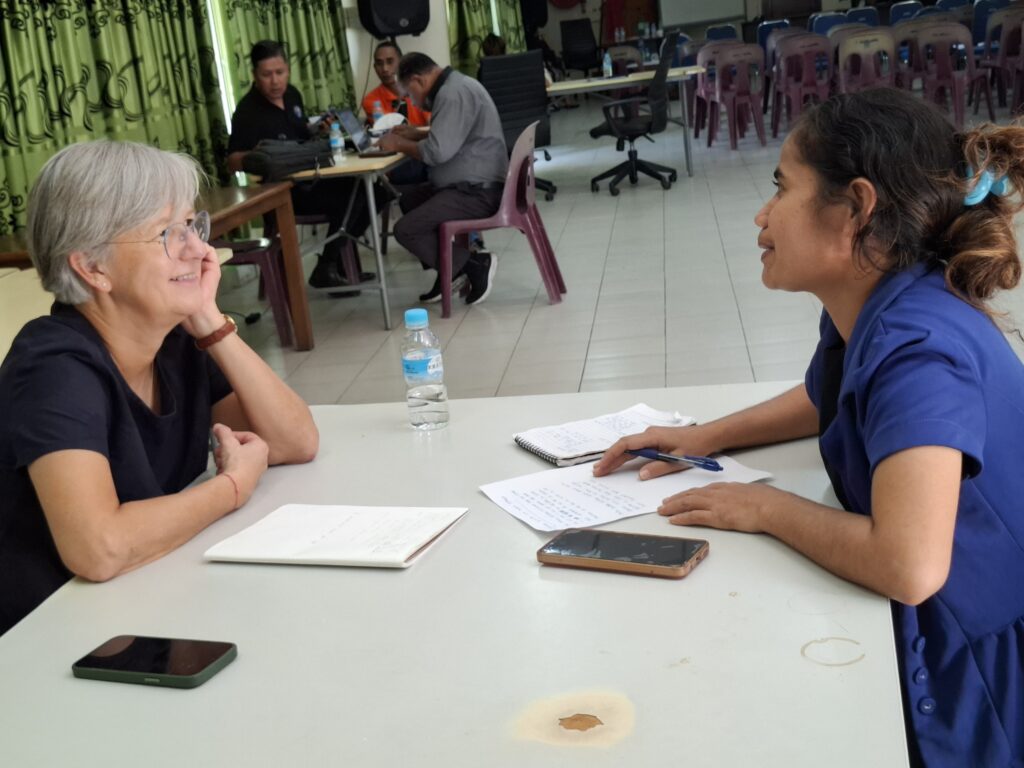
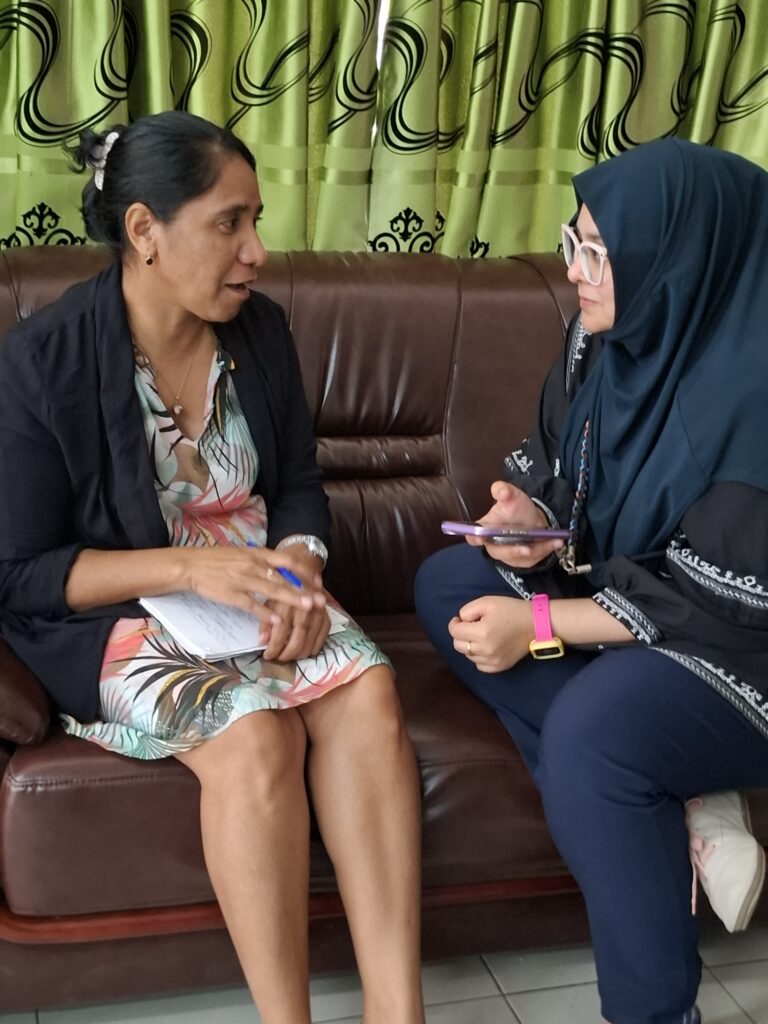
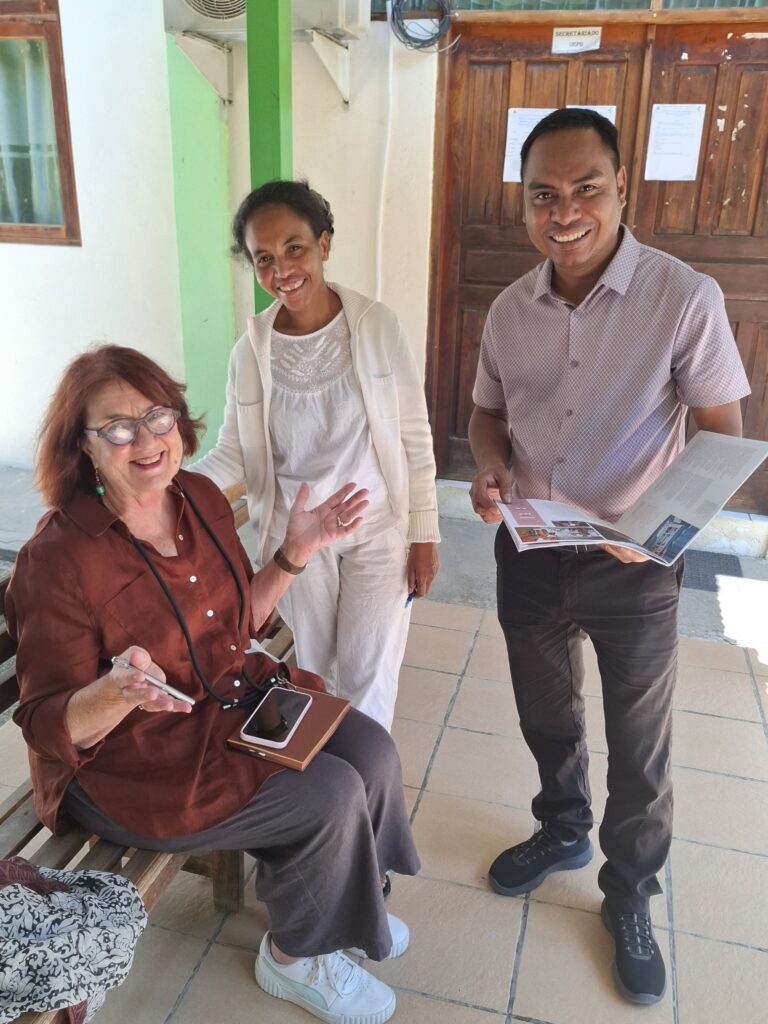
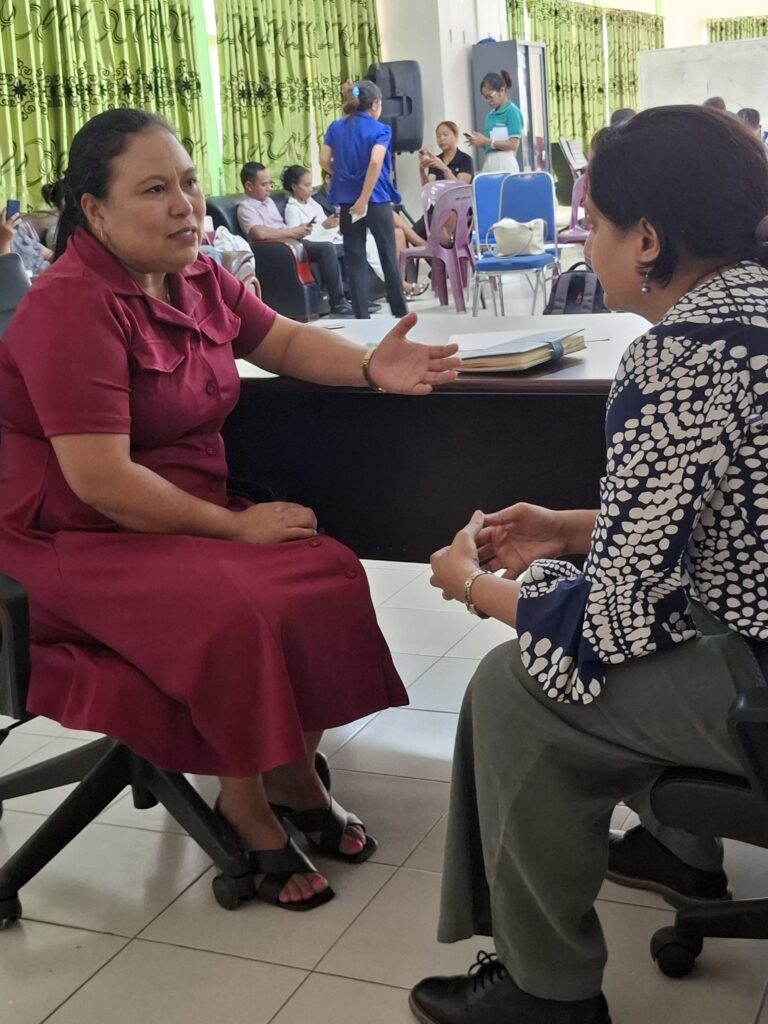
What made this module especially memorable was the depth of reflection it encouraged. The faculty and participants created space not only for skills-building, but also for honesty, empathy and human connection, supported by one-to-one feedback that helped unpack strengths and areas for improvement.
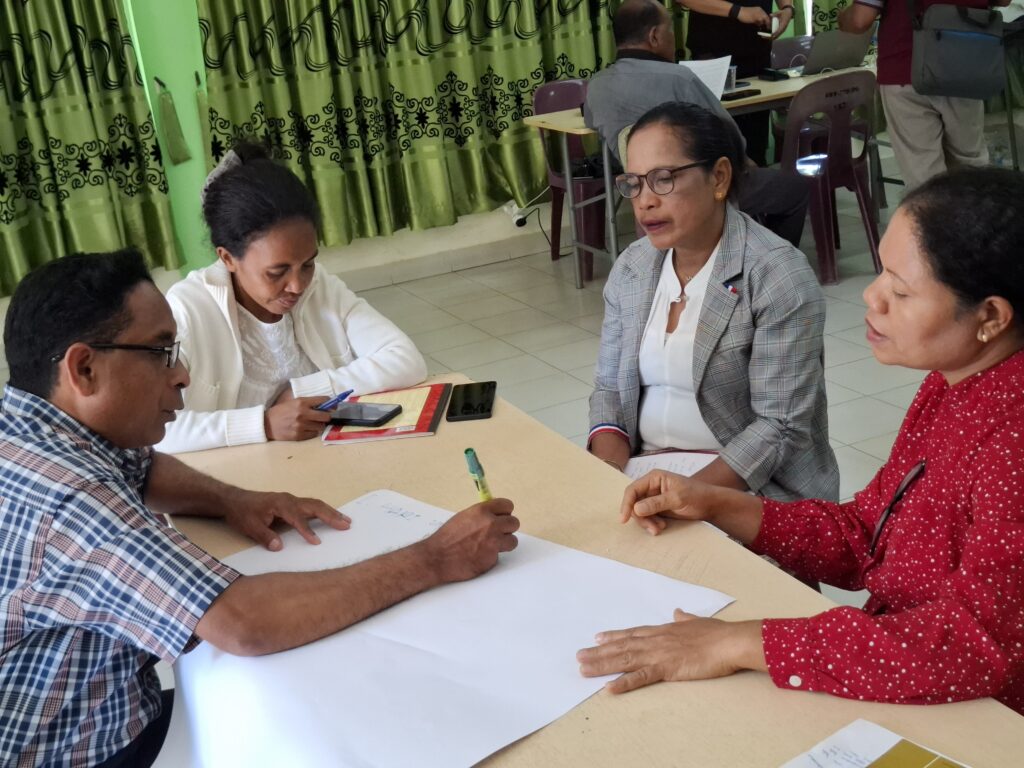
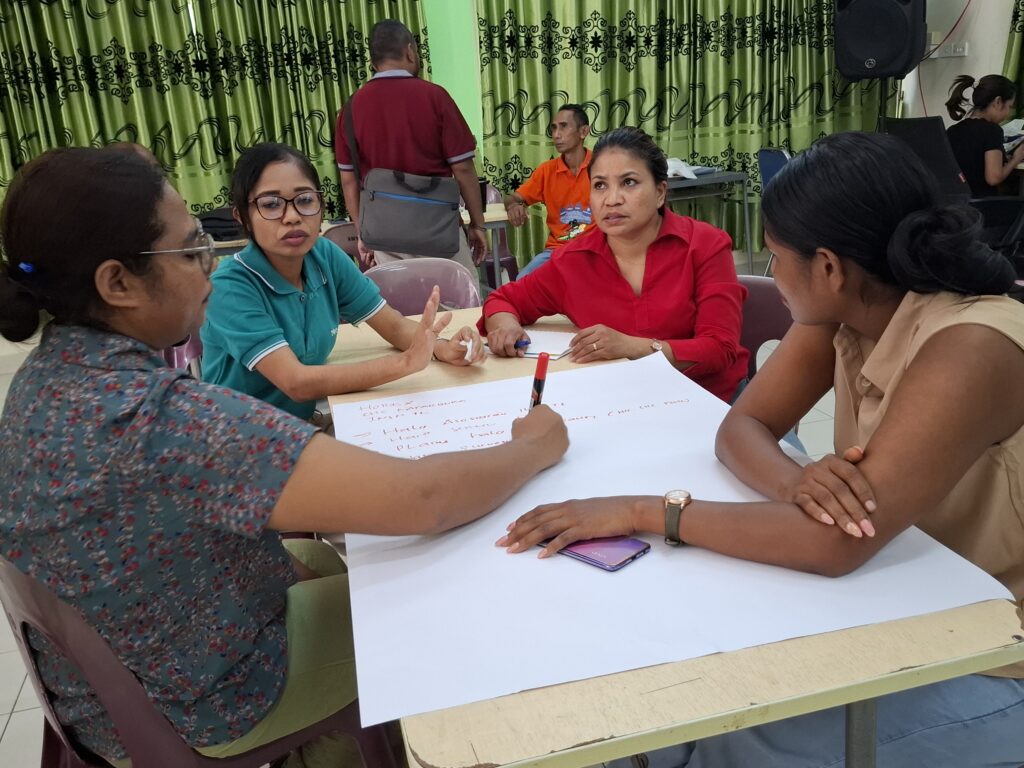
In one particularly meaningful moment, careful observation and candid dialogue brought previously unspoken tensions into the open. What might have remained unresolved instead became one of the programme’s greatest lessons. Through humility, honest reflection and gracious conversation, participants discovered that meaningful leadership begins with the willingness to listen. One senior participant openly acknowledged the value of receiving frank feedback as an essential part of becoming a better leader.
It was, perhaps, one of the week’s most important teachings delivered not by a faculty member but by the group itself.
Stories and Aspirations for Palliative Care
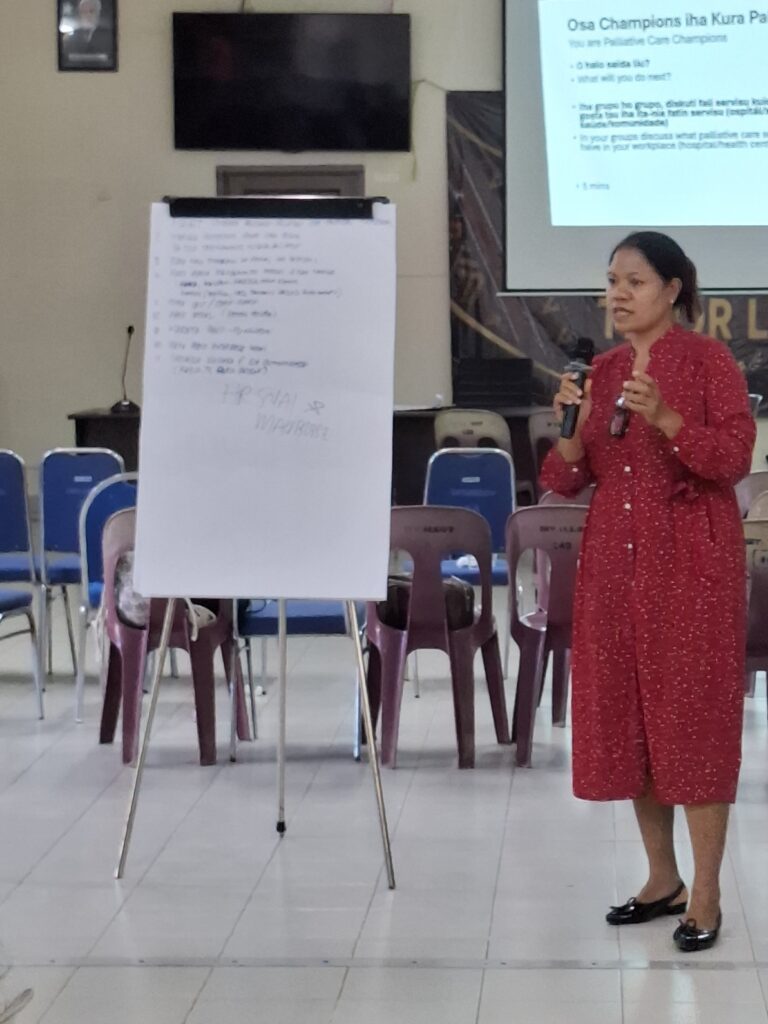
Across Timor-Leste, participants are applying their training in diverse and deeply human ways, showing how palliative work can transform communities even with limited resources. One particularly moving example comes from Suai, where a frontline nurse became the first point of contact for families in need. She not only taught colleagues how to manage wounds like bed sores but also visited patients at home, recording their progress and guiding families through the painful process of acceptance. Her work illustrates the heart of palliative care: standing beside families in their hardest moments, offering both knowledge and humanity.
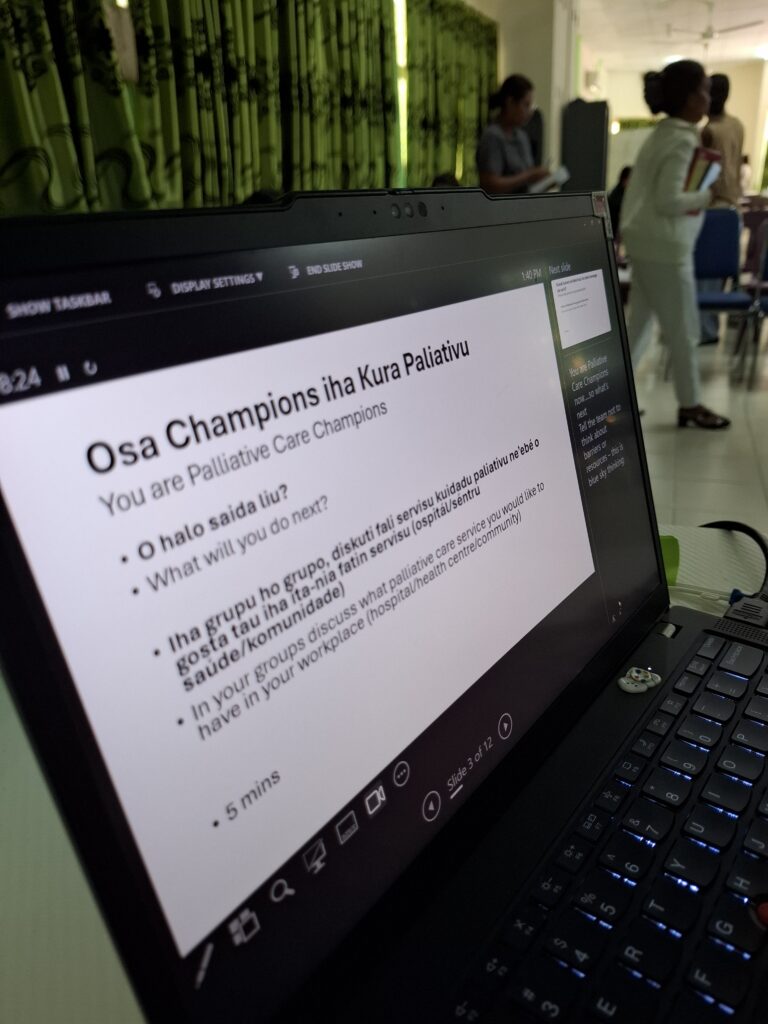
Yet, the workshop participants also recognized that compassion alone is not enough. They drafted a wish list for the future of palliative care in Timor-Leste, calling for government support policies, safe facilities, training centres, home care services, transportation, and social services. They emphasized the need to train specialists, establish a national palliative care association, conduct surveys and research, and build online platforms for awareness. Equally urgent are practical resources like equipment, ambulances, therapy centres, access to medications and palliative care units in every hospital.
Graduation and new beginnings
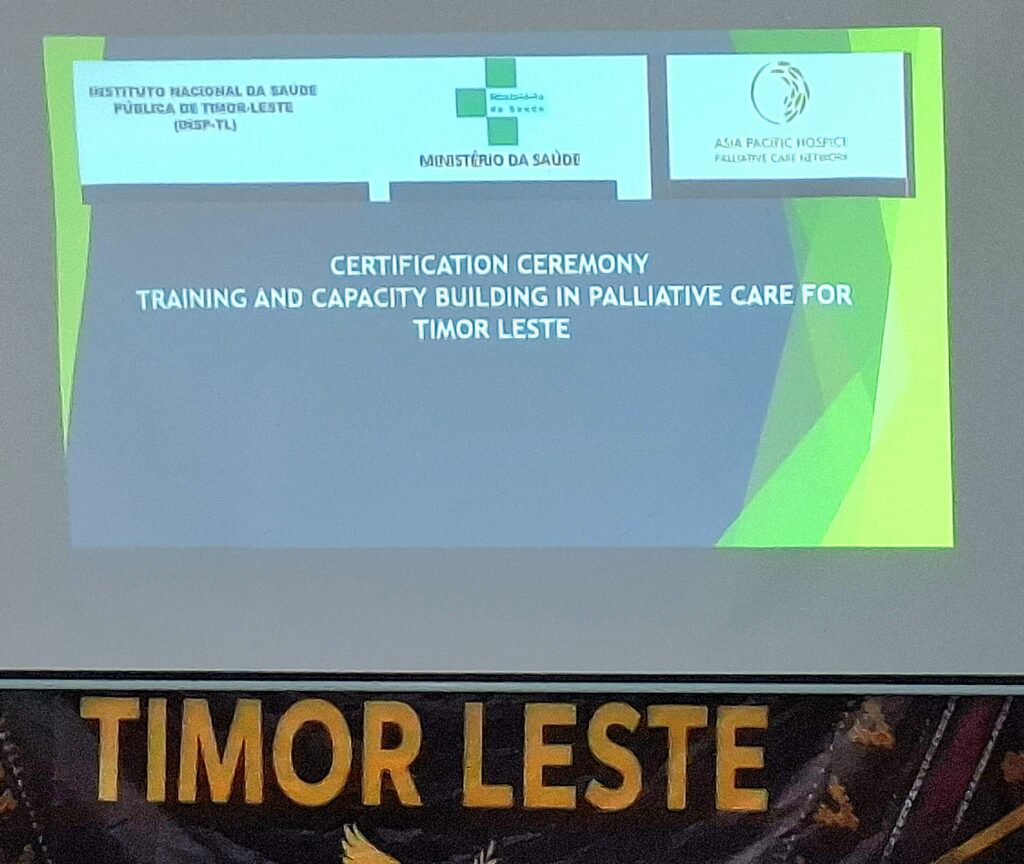
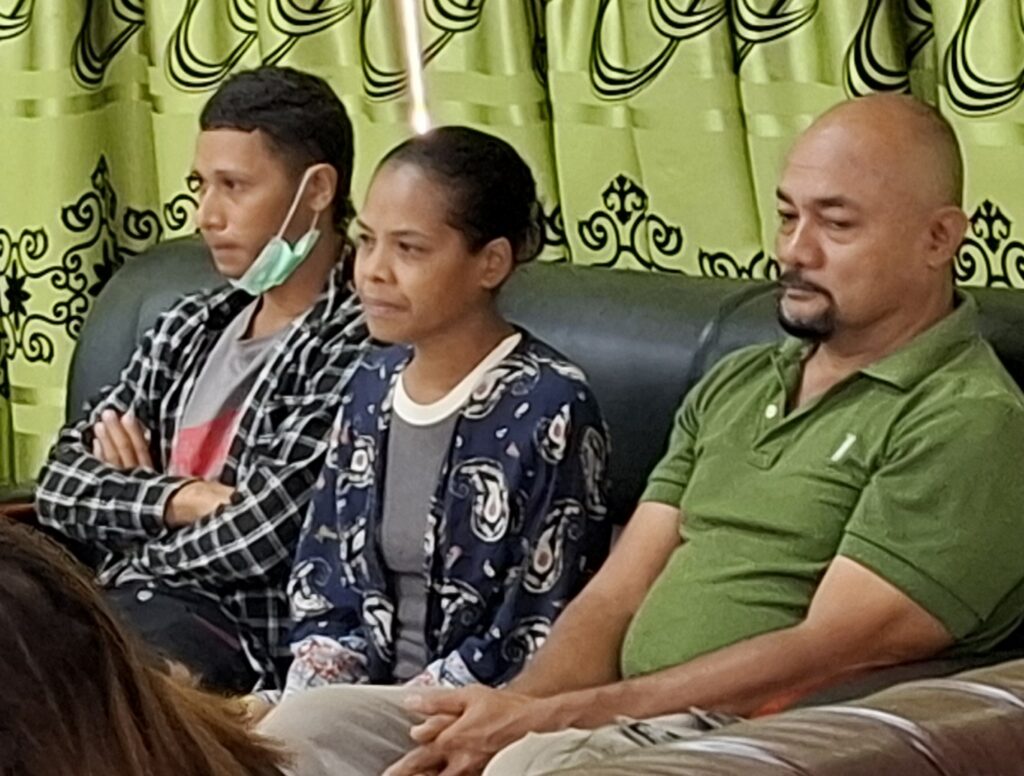
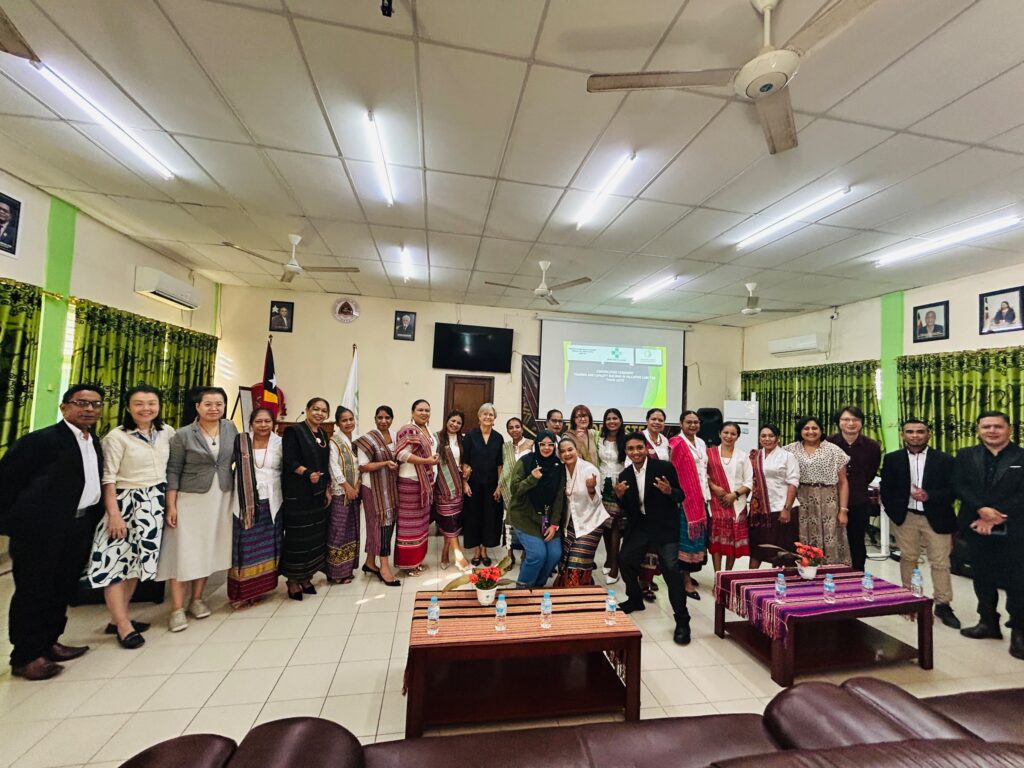
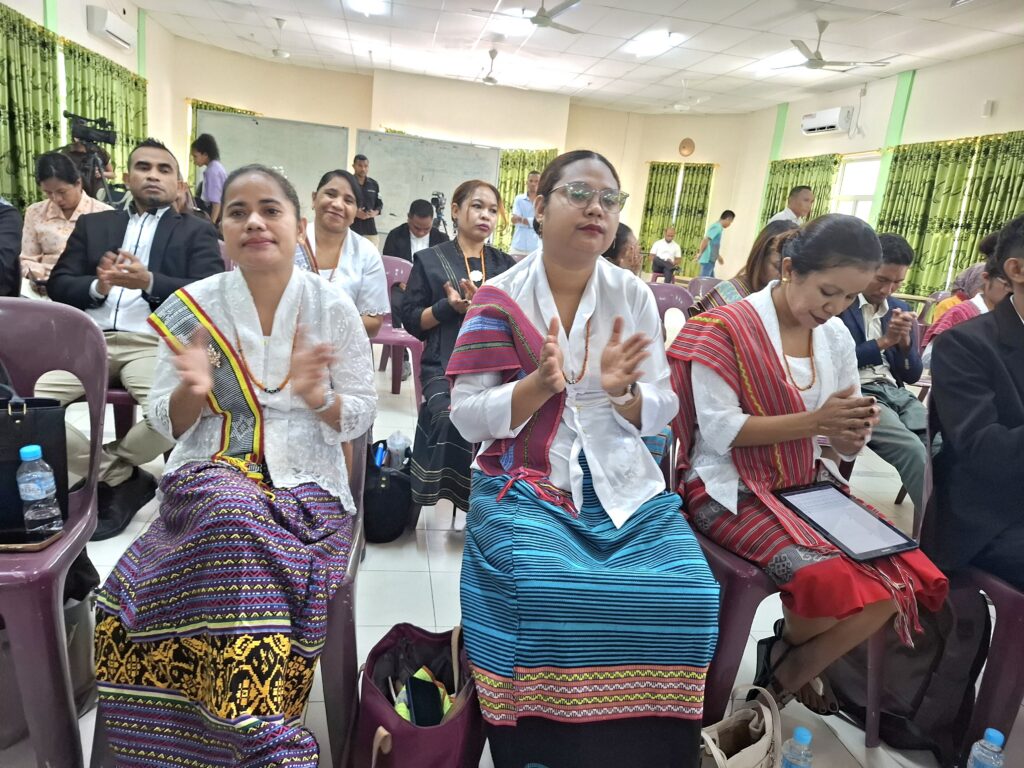
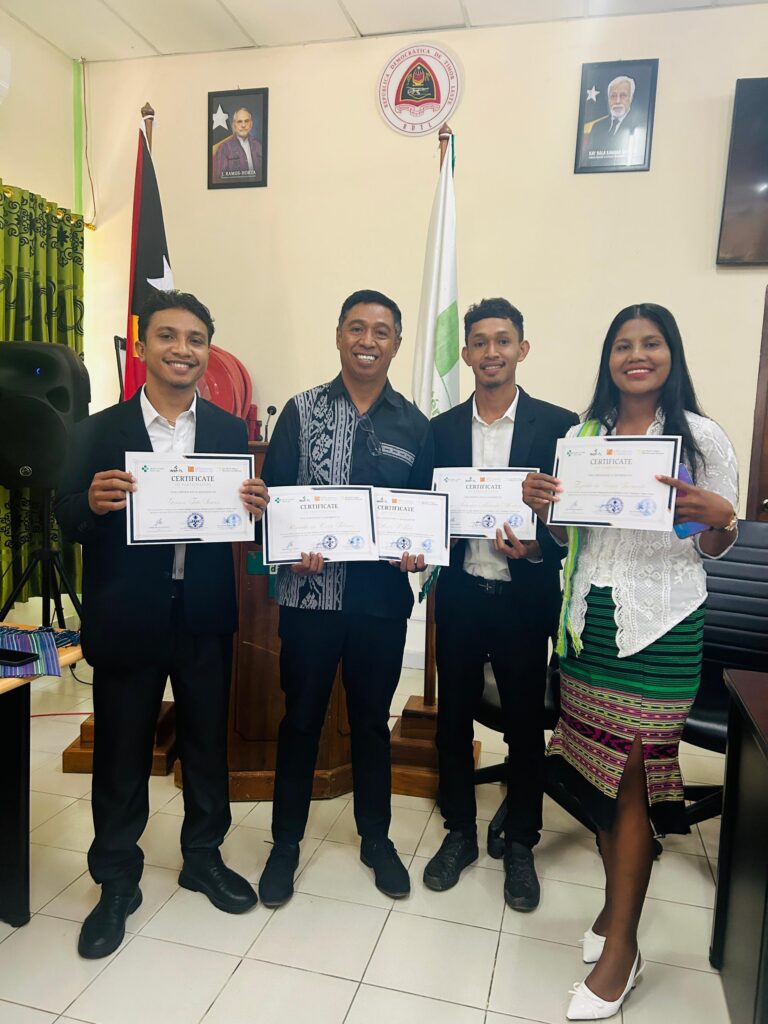
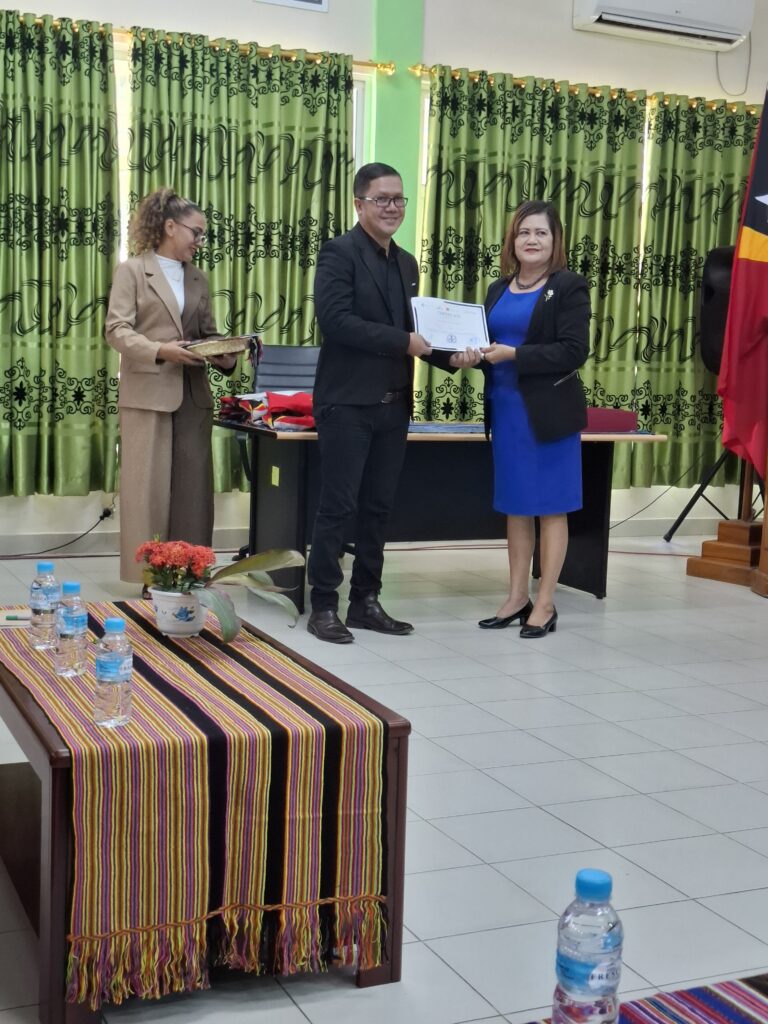
The graduation ceremony, with participants dressed in their traditional Timor-Leste customs, was a fitting celebration of dignity, identity, and shared purpose. It was a proud reminder that the palliative care movement in Timor-Leste is growing with cultural strength, professional commitment and collective hope. The best is indeed still to come.
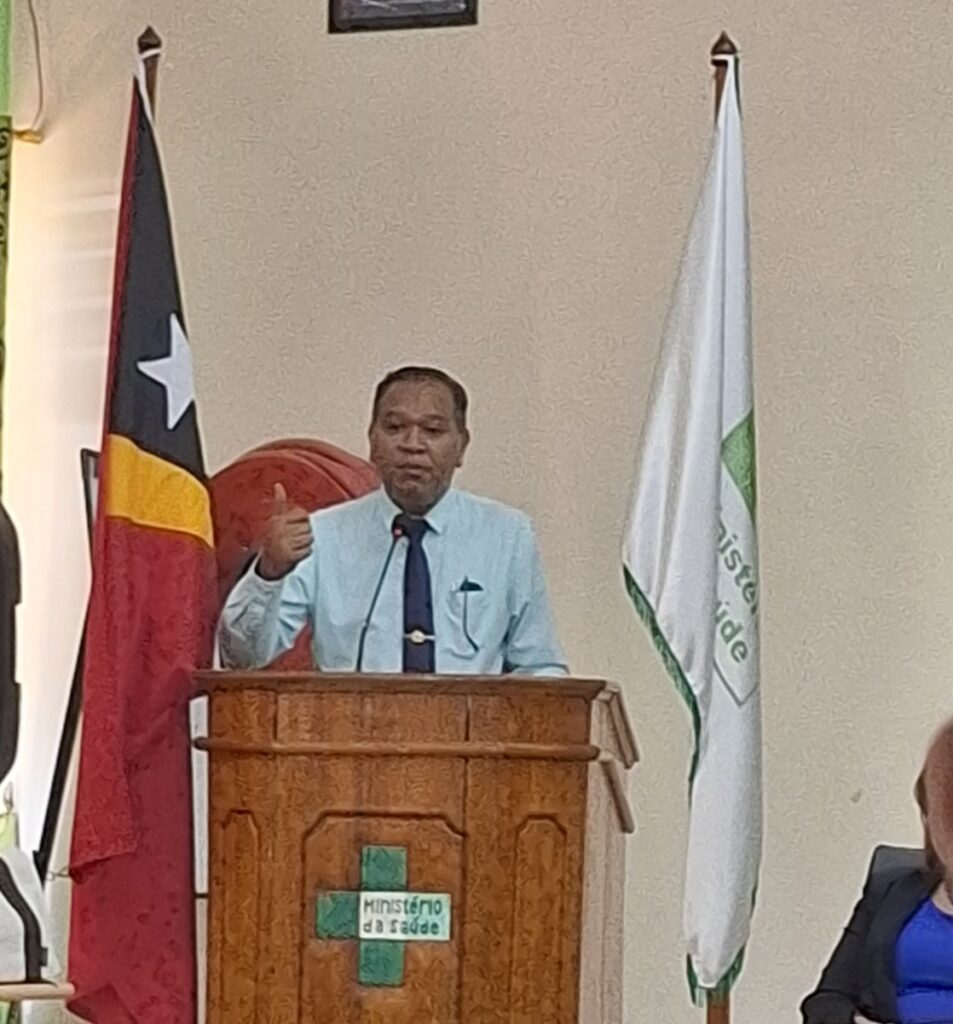
With heartfelt thanks
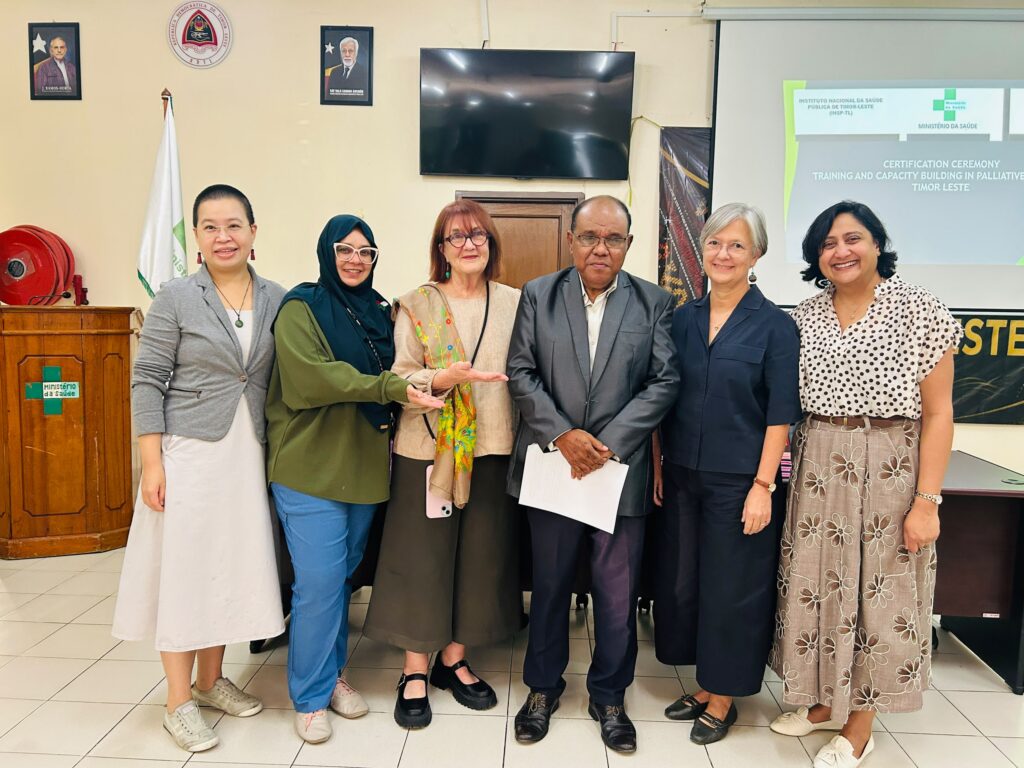
The Secretariat extends heartfelt thanks to the dedicated faculty volunteers for the Lien Collaborative programme in Timor-Leste: Dr Sylvia McCarthy (Malaysia), Dr Dipti Mittal (Australia), Dr Ann Toh (Singapore), Ms Joan Ryan (Australia), Ms Nur Hamizah Salim (Singapore) and Ms Rachael Anthony (Malaysia). Thank you for giving your precious time, away from work and loved ones at home, to support this group of palliative care champions. Your generosity is woven into every hospital and every home where this care now reaches.
To Dr Brandão and his team in Timor-Leste, thank you for the leadership you carry, the people you support, and the difference you continue to make every day. What began with a single video and a single conviction, has become a national movement toward equitable, compassionate care.
A meaningful leadership journey begins when vision is shared, skills are passed on, and courage is sustained in service of others. For Timor-Leste, the best is indeed still to come.
From the Secretariat Desk, with gratitude and pride.
Written by Cheyenne Chai (APHN Executive)
This project is a Lien Collaborative for Palliative Care initiative to build capacity in developing countries in Asia. The Lien Collaborative for Palliative Care was co-developed by the Asia Pacific Hospice Palliative Care Network (APHN) and the Lien Foundation.

